
Like any other guy, I’ve seen other men–occasionally in person–and thought, Wouldn’t it be great to be that guy? Or, at least, a guy like that guy? I’ve never met a man, for example, who didn’t think that having a build like a young Arnold Schwarzenegger would be great. Or who didn’t wish he could hit a fastball like Aaron Judge, or star in a spy movie like Sean Connery.
Of course, each of those guys had to work very hard to get to the top of their profession. Yes, they had some natural gifts, but that only takes you so far. You have to put in the work, and it takes a lot of that to get to the top and even more to stay there, as long as possible.
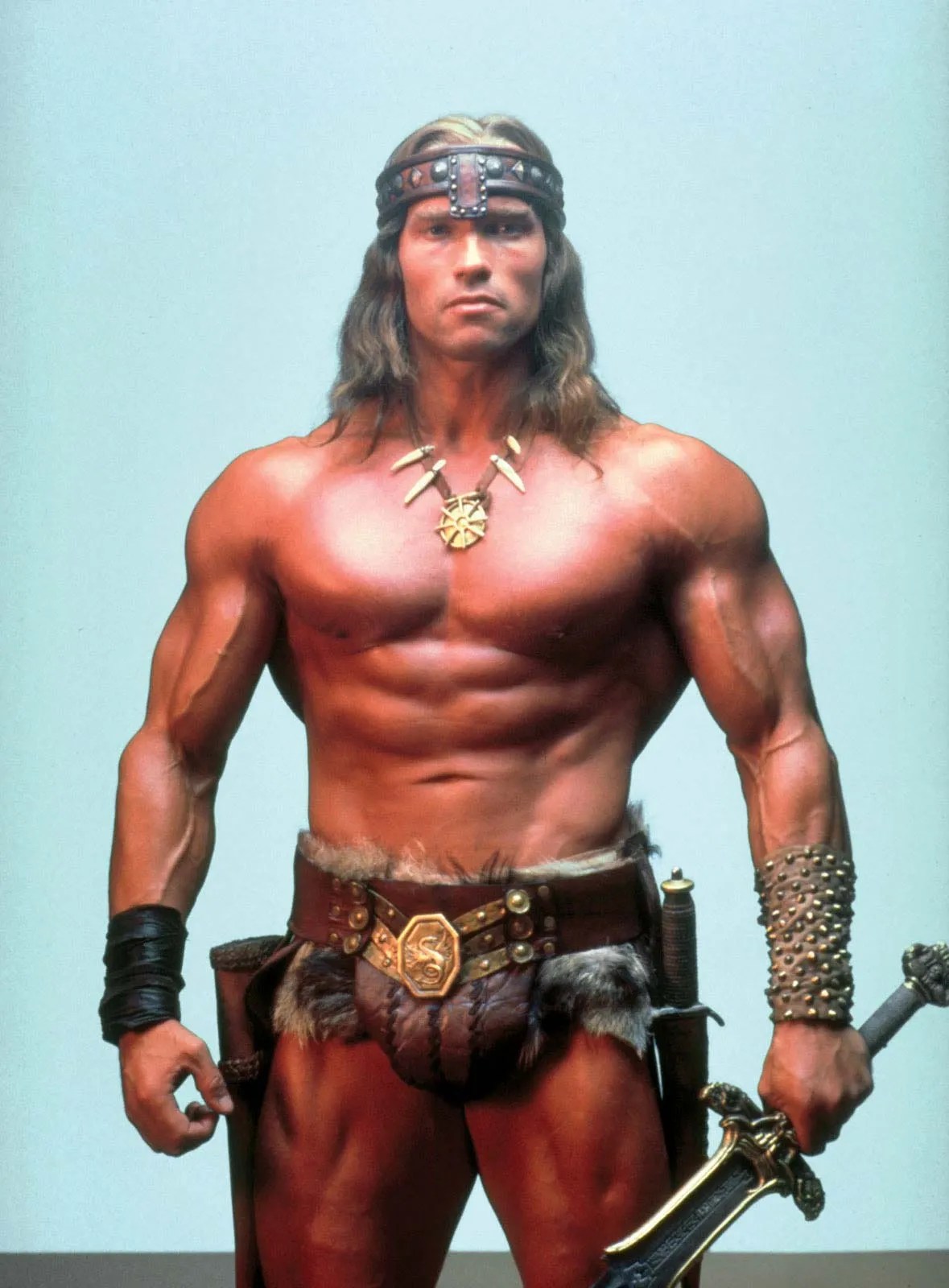

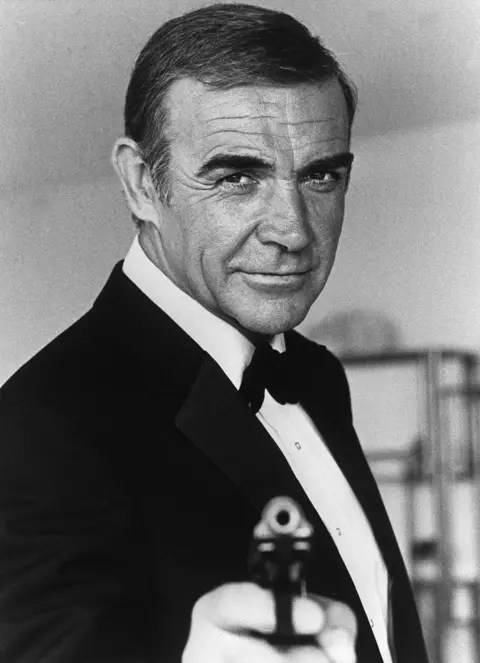
Schwarzenegger, shown above as Conan in one of his early movie roles, turns 78 in a few months and is still actively promoting physical fitness and environmental activism. Judge, in the prime of his career, currently leads the Major Leagues in hitting with a scorching .427 batting average and is tied for the lead in both home runs and runs batted in. Connery died at 90 in 2020, and his distinguished 58-year-long film career included seven starring turns as James Bond. Although 007 fans consider him to be the definitive Bond, he won his only Oscar for playing an Irish-American cop in The Untouchables (1987).
It’d be great to be one of those guys, but…
I got to thinking about this the other day. Not because I’d read one of Arnold’s newsletters–I subscribe to his Pump Club blog–or heard of Judge’s latest heroics on the diamond, or caught a few minutes of a Connery film on TV. No, I thought of this when Sue and I were driving home from a trip to town for a workout and Engelbert Humperdinck started singing on the radio. The song was “After the Lovin’,” a hit for him back in 1976. His picture appeared on the car’s computer screen and I pointed it out to my lovely bride, saying, “When I was a young man, I really hoped I’d wind up looking like that when I hit 40.”

My wife, who remembers me well from the time I hit 40, assured me that I was right in Humperdinck’s league in terms of looks. She might possibly have been a little generous, but what can’t be disputed is that I could never sing like he did, and that’s one thing I always thought would be about the coolest thing ever: to be a crooner.
Humperdinck, whose real name is Arnold George Dorsey, was part of that 1960s-70s wave of guy singers whose vocal style could cover the old standards like a champ and also rock a modern-day hit. Tom Jones comes immediately to mind. A British subject like Humperdinck, Jones headlined a hugely popular TV show from 1969-71 which earned him millions and made him an international superstar. Only 31 when the show left the air, Jones continued to perform at clubs and on TV, and in fact is still going today, a month shy of his 85th birthday. This weekend he’s headlining two sold-out club shows in Clearwater, Fla.

At one time, Sue was a little gaga over a younger crooner by the name of Michael Buble (pronounced boob-LAY), a Canadian singer who has made a career of following in the footsteps of Jones, Humperdinck and the great singers who preceded them, all the way back to Frank Sinatra, who was of course the ultimate crooner (even though he didn’t consider himself to be one). I don’t want to say she had a thing for him, but I do remember giving her a Buble CD as a gift and she kissed his picture when she unwrapped it. So, for Christmas one year I said we’d be going to one of his upcoming concerts. It was at the Xcel Energy Center in St. Paul, and we had seats on the floor, about 20 rows from the stage. At first, she thought it might’ve been better if we’d had seats on either side, to get a more elevated view. There was a small, portable stage set up within just a few feet of us, and Buble did one blistering set from there. I didn’t hear any more talk about changing seats.

What, exactly, defines a “crooner”?
Google AI says this: A crooner is a singer, typically male, who sings in a smooth, intimate style, often associated with ballads and popular songs from the 1930s-60s. They are known for their soft, expressive voices, often accompanied by a sophisticated and romantic musical arrangement. The website Ranker, which, as you might expect, likes to rank things, says these guys are the top ten crooners of all time: Nat King Cole, Frank Sinatra, Dean Martin, Bing Crosby, Tony Bennett, Perry Como, Andy Williams, Bobby Darin, Johnny Mathis and Louis Armstrong. Humperdinck is at #17, right ahead of Buble. Jones is 20th on the list. Elvis Presley, by the way, generally considered to be a rock singer, is 11th on the crooner list.
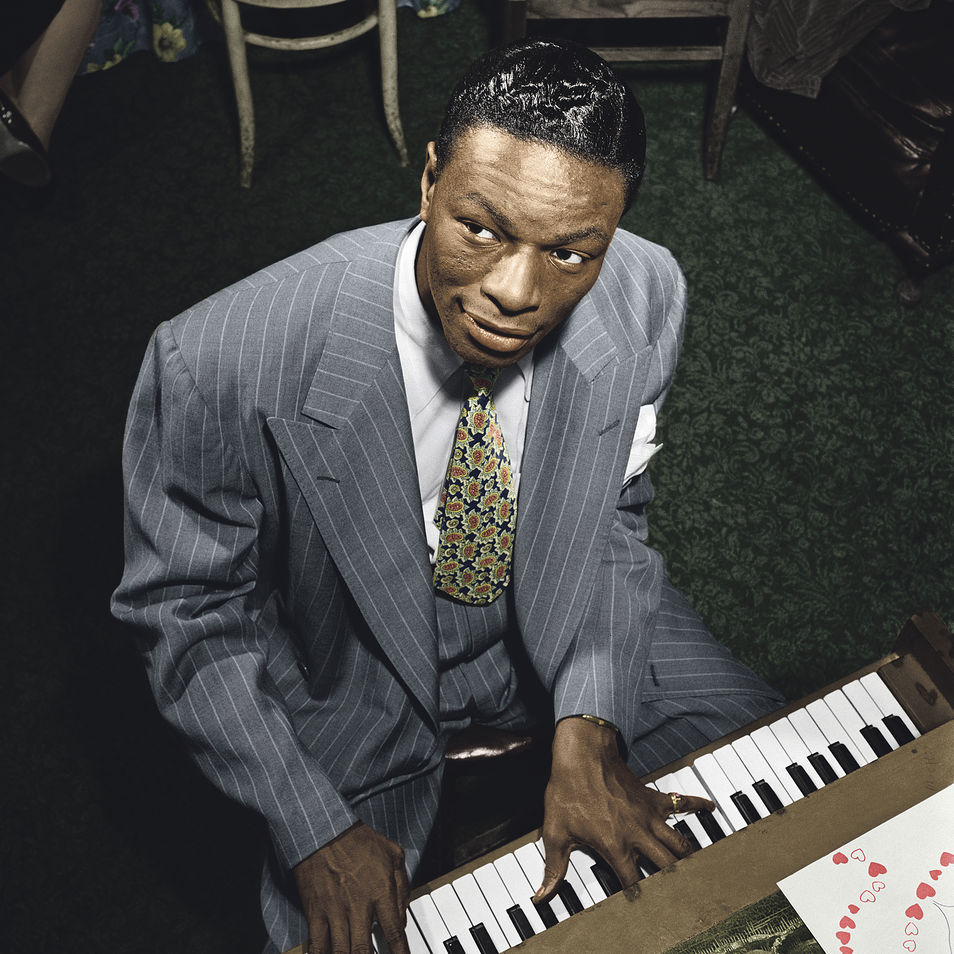

Cole (1919-65) was one of the most influential African-American performers of the 20th century. Sinatra (1915-98), of course, needs no introduction.
I’ve never considered myself to be a great singer, by any means, although I’ve sung bass in our church choir for many years and occasionally will do a solo or sing as half of a duet, and nobody flees the sanctuary in terror. I’m certainly not anywhere close to these guys. But I can dream, can’t I?
Several years back, one of my favorite websites, Art of Manliness, ran a series of posts under the category of, “So, you want my job?” The series showcased several professions, including farmer, concrete mason, elevator mechanic and many others. One of them, back in 2015,focused on a crooner. The post was an interview with Wade Tower, an Oklahoma-based lounge singer whose act consisted of classic standards from the Sinatra era, but who also did a show featuring George Strait country. Tower was 50 at the time, and working a full-time day job in addition to doing about 100 singing gigs per year. He didn’t say what kind of money he made at it, but he wasn’t doing it for pennies, that’s for sure. Ten years after the AofM interview, Tower is still singing: check out his website here.http://www.wadetower.com. That’s his picture at the top of this post.
You’ve gotta have the voice, but you’ve also gotta have “it.”
All of the great crooners had the voice, of course, and if you check out Wade Tower’s website, you’ll hear his, and it’s very good. But these singers also have something else: charisma. They may not be the most physically imposing or dashingly attractive guys around–Sinatra stood only 5-8, and Crosby didn’t exactly look like Clark Gable–but they knew how to command a room the moment they walked into it. Jones is still doing it in the seventh decade of his career. The only regret I have from taking Sue to see Michael Buble was that I wasn’t working in radio at the time; if I had been, I might’ve been able to wangle backstage passes for us. I’m sure it would’ve been memorable, and in a good way; I’ve met many country singers, and without exception they were polite and gracious to us, especially to listeners who might’ve been brought backstage as contest winners. (One lady I escorted backstage in La Crosse to meet Kenny Rogers almost fainted as he walked toward her.)
Buble certainly had an onstage presence, and undoubtedly still does. Sinatra’s was legendary, of course, whether he was performing in a small Las Vegas club or Madison Square Garden. Sometimes, performers have said it’s hard to turn it “on” and then “off” when you’re not onstage and just want to relax with a few close friends or family.
To a much lesser extent, that’s the same for me after such a long career in radio. My voice is often recognized by people I meet in the area, and I always have to be mindful that meeting me might very well be a significant event in that person’s life. This was drummed into us back in college at UW-Platteville, where I majored in broadcasting, and reinforced to me several years later when I worked for a brilliant radio guy, Perry St. John, in La Crosse. You’re always “on,” even when you’re not actually on the air. Sometimes that can be a bit of a pain, and you find yourself wishing to just be anonymous. But then, when we travel and I really am anonymous, I find myself missing the notoriety…at least a little bit.
There’s something else about crooners that I admire, and it has to do with their charisma, which almost seems like it’s from a different era. These days, younger performers do anything they want onstage. Nothing–profanity, rudeness, even flashes of nudity–seems to be out of bounds anymore. Not for modern-day crooners like Michael Buble, Tom Jones or Wade Tower, and certainly not for the legends like Sinatra, Crosby, Martin, Bennett, Cole. They seem to be men from a different time. Yes, of course, many of them were, but it’s a time that still appeals to us today. Why? Well, Tower put it this way in his AofM interview:
I always had this love of the 40s where people dressed well and seemed to have much better manners than they do today. There was a feeling of formality to life then and a sense of gratitude that rang true to me.
I didn’t live in those times, but in a way, I sure miss them.
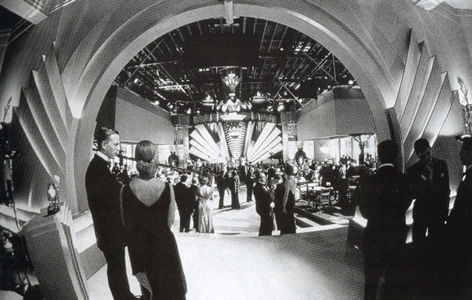
they got the Cobalt Club just right.
 A Strenuous Writer's Life