I was scrolling through my various online feeds today and came across the latest Substack post by Dying Breed, an offshoot of The Art of Manliness. I’ve followed the latter for several years and enjoy the new site’s posts, which are usually authored by Kate McKay, wife of AoM’s founder/editor, Brett McKay. This post was a short one: No Regrets.
One of Frank Sinatra’s many hits was “My Way,” which was adapted from a French song by Paul Anka and recorded by the Chairman in 1969. Five years later, he sang it in concert at Madison Square Garden in New York City: “My Way.”
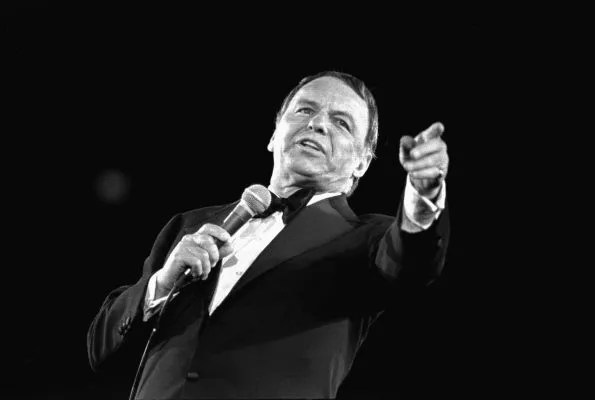
One of my regrets in life is never getting to see Sinatra perform in person. When he did his show at the Garden in 1974, he was approaching his 59th birthday, at the top of his game. Truly, one of those few performers who, it can be said, has the audience in the palm of his hand. I was a senior in high school that year, and considered Sinatra to be hopelessly old-fashioned. It was only in my later years that I really grew to appreciate his talent and dedication to his craft. Several years ago, Sue and I saw Michael Buble in concert in St. Paul, and he had that same charisma, not to mention prodigious talent. Sinatra, though, set the standard.
In the song, Sinatra concludes that in spite of everything, he has lived a full life. He did it his way. Hopefully, he was thinking of that in his final days, before his death in 1998 at 82.
…but then again, too few to mention…maybe.
In this new year, I’ll celebrate my 70th birthday (hopefully). In the big scheme of things, I don’t have too many regrets. Yes, I should’ve driven to the hoop more during that last high school basketball game, when my outside shot wasn’t falling and we wound up losing to Belmont, well short of our goal of making the state Final Four in Madison. And maybe I should’ve gone into the military service after high school, and for sure I should’ve played basketball in college at UW-Platteville. But I also know that if any of those things had turned out differently, my life might have been irrevocably changed; if I’d wound up winning the state title or spent four years in the Air Force or played ball in college for the Pioneers, maybe I never would’ve married my first wife, so my two wonderful kids (and grandson) would never have been born, and maybe I don’t find myself starting a new radio job in Rice Lake in 1991 and so I never meet Sue, the love of my life.
I was thinking about “regrets” the other day, when I was conversing online with an old high school classmate. The Potosi High School class of 1975 held its 50th anniversary reunion last September, and a fine time was had by all. We had a tight-knit class of about 45 kids, most of whom had been together since elementary school. I saw old friends I hadn’t seen in many years.

Judy (Friederick) Irish, who is 7th from left in the front row, was one of the event’s organizers, and it was great to catch up with her. During our conversation, I told her of some regrets I had from our PHS days. Besides the obvious one, that I didn’t always treat the girls with the high level of respect they deserved–something I suspect virtually all of us guys had in common–I recalled three of our classmates, guys who were a little different than the rest of us. Two are dead, the other in prison. Judy and I reminisced about them a little, and I said that I’ve always felt that if I’d been a friend to them, maybe they would’ve had better experiences in high school and maybe, just maybe, their lives would’ve turned out better.
Bruce and Dan and Terry were their first names. Terry, often called TK because of his initials, had grown up in town, while Bruce and Dan came to Potosi in eighth grade, if I remember correctly. Bruce was almost certainly gay, and came in for sometimes-merciless ribbing from the other guys in the class, although I can’t remember any incidents that crossed the line to cruelty or violence. Dan was an overweight kid with a bad complexion. His own poor attitude didn’t help matters, but perhaps a lot of that came as a reaction to being excluded from the groups toward which virtually all other guys in the class gravitated. Being a small class in a small town, we didn’t have many; basically, there were the athletes (I was co-captain of the basketball team) and the rest. Most of us played at least one sport, so the non-athletes were few indeed, but they weren’t necessarily excluded from hanging around with us in the hallways and at lunchtime. TK was one of “us” for the first couple years of high school, but then he didn’t go out for football or basketball after our sophomore year. Why not? Nobody ever bothered to find out. He was never a star, by any means, but he had some ability, and maybe with encouragement from his peers he could’ve persevered and contributed to the success our teams had. To someone just joining the class, it would’ve seemed TK had a lot going for him: in addition to being a moderately-talented jock, he was a good-looking guy and a sharp dresser. Yet things never really seemed to click for him, socially. I don’t recall that he had any close friends.
As mentioned, I was one of the top guys on the basketball team, so I had a greater responsibility than other guys in the class. I was in a position of leadership, and I should’ve worked harder to be more welcoming and inclusive toward those three classmates of ours.
Maybe just treating Bruce like a regular guy would’ve reduced the amount of harassment he had to endure. Bruce died of AIDS several years after he dropped out of school.
Maybe encouraging Dan to use his size on the football field would’ve led him away from the path that eventually put him in prison.
Maybe befriending TK would’ve helped him to fully become “one of the guys,” and he wouldn’t have committed suicide several years after graduation.
The science, and reality, of regret.
There have been studies about the impact of regret in a person’s life. This is a pretty good one: These kinds of regrets last the longest.
My brother Alan said he once asked our father if he had any regrets. Dad said, “I didn’t take enough risks.” We never asked him to elaborate on that, and perhaps we should have. Dad finished college after his Army hitch and had a 37-year career in education, as a teacher and then an administrator. An honorable and successful career, by any measure, and in retirement he and my mother lived comfortably, traveled the world and left a generous estate to their kids and grandkids. The most valuable lesson they taught me was to love the Lord as they did, so I know I’ll see then again someday and we’ll have eternity together. What type of “risks” could my father possibly have been referring to? I’ll never know for sure, but my brothers and I have a couple ideas. At one time, while in his late 20s, Dad actively considered re-entering the military, perhaps with the goal of becoming an officer. And there were probably one or two job opportunities that came along which he chose not to pursue, and later thought that maybe he should’ve.
But, as he often said, “The proof’s in the pudding.” His life turned out very well indeed. He was married to the same woman for almost 68 years. He was highly respected in his profession and a founding member of his church down in Arizona. To say he was worshiped by his sons and grandchildren would be an understatement.
The person you are today, whoever you are as you read this, is the sum total of all the decisions you’ve made in your life. Even if there was a decision made by someone else that impacted you, how you reacted to that was a decision you made. When my boss at the radio station in La Crosse told me he didn’t want me around anymore back in 1989 and I had six weeks to find another job, I moped about that for a day or two but then went out and found another job, which led to the Rice Lake job in 1991, and to Sue. So I really owed that guy a favor, actually; I never had a chance to repay it before he died a few years ago. What would I have told him, given the chance? Well, who knows? That’s not important. Move on, Dave, I would’ve said to myself.
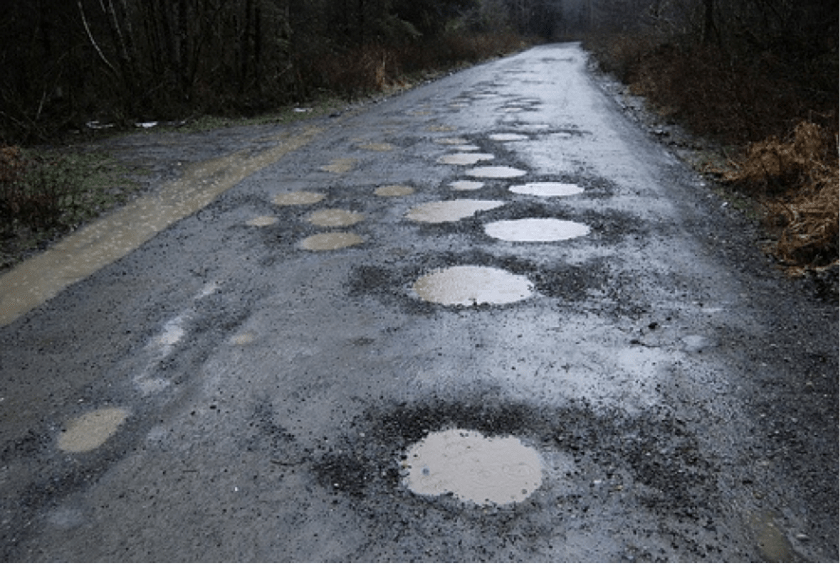
I’ve been thinking about the concept of “regret” in relation to my work-in-progress novel, The Dance We Shared. In the story, the protagonist, Ben, has carried a deep regret for 20 years: his stupid mistake cost him the love of his life, Ronnie, who broke up with him and married another man. Based on the article quoted above, that was an “ought” regret for Ben, a “pothole in the road” of life. For Ben, it was a pretty big one, but he made his way out of it and built a decent life for himself. He’s been carrying that “ought” regret around for a long time and has come to accept that it will always be with him. Finally, though, he is unexpectedly given another chance. He can take action to rectify his mistake, and perhaps win Ronnie back.
This is being written the day after the Green Bay Packers blew a 21-3 lead and lost their playoff game to the Chicago Bears, 31-27. The team suffered an epic collapse in the second half, which might wind up costing the head coach his job. (Many fans are calling for that today, and I have to admit I’m one of them.) No doubt the Packers players and coaches are full of regret today about the decisions they made after halftime last night. For most of them, there will be another season, perhaps in a different uniform. If they win the Super Bowl next year, the wounds of last night’s defeat will be forgotten. It’s tough for them now, but we’ve all been there, haven’t we? That last shot doesn’t drop, and your team loses. Your boss tells you it’s time for you to move on. Your wife says she wants a divorce. Your health takes a sudden and unexpected decline. When that kind of stuff happens, it’s tough, but that reminds me of something else my dad taught me:

 A Strenuous Writer's Life