
Like everybody else, I’d like to live a long time. As I approach my 69th birthday in less than two months’ time, I’d like to think I have another 20-25 years left. I’ve already outlived my maternal grandfather, who was taken by cancer at 64. I have a ways to go before I catch Grampa Tindell, who died of a heart attack at 76 while I was in college. My parents, who both lived to 87, are further down the road.
Is there a secret? Well, maybe. We’ll get to that, but first I wanted to mention something else that ages, and usually not particularly well: TV shows. In the last few months, I started watching episodes from one of my old favorites, LA Law, on Hulu. And while the show has held up nicely in some respects, it hasn’t in others.
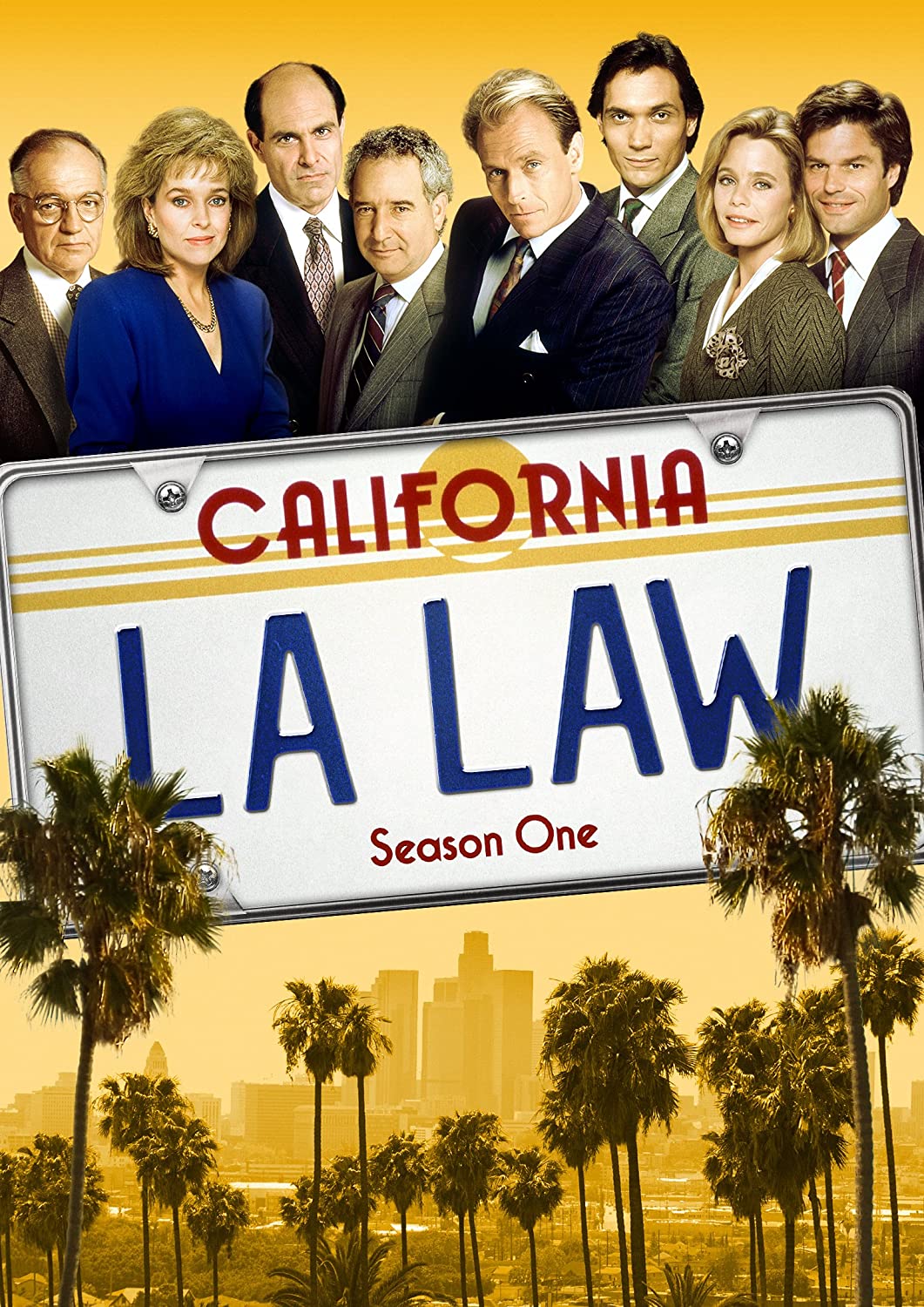
The show made quite an impression on me at the time. I was nearing my 30th birthday, working in a profession (radio) that I loved but which didn’t pay very much and had almost nothing in the way of benefits, and was also in a marriage that I sensed was not going to last much longer. (Six more years, to be exact.) And here came these lawyers–one in particular–who seemed to have found the secret to living the life I thought I wanted to live.
Most prominent among them was divorce attorney Arnold Becker, who was the all-time champ among the lawyers at McKenzie Brackman, bringing in one high-profile client after another, providing him with a comfortable six-figure income and the firm with a big chunk of revenue. Played to perfection by Corbin Bernsen, 32 at the time of season 1’s premiere, Becker seemed to have it all: the looks, the Armani suits, the Porsche sports car, the beachfront Malibu home and the women. Lots of women. About half a dozen episodes in, I thought about counting the number of women he’s with on-screen, but decided that somebody else had probably done it, so why take the time?
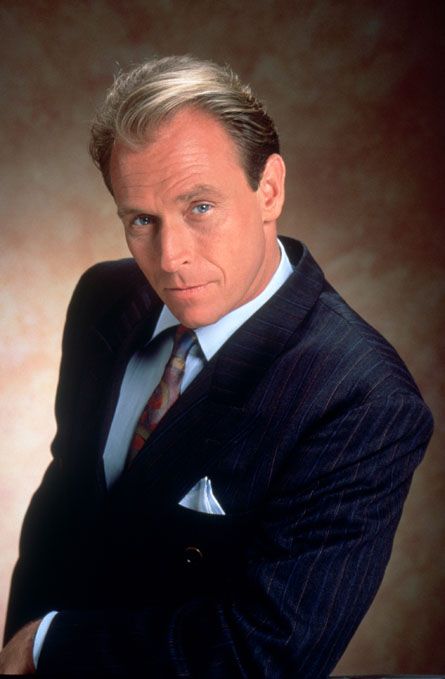
There was a lot to like about Arnie back then, I remember thinking, but watching him again nearly 40 years later, my attitude about him is decidedly different. Yes, he seemingly had it all, but what did he do with it? He focused his considerable charm into getting into one relationship after another, and whenever any of the women started hinting that they wanted something more permanent, he bailed on them, always blaming the breakup on them. Married once during the run of the show–to Corinne, a former client–he cheated on her with a secretary a week before the wedding, and then shortly after promising to love, honor and cherish, he did it again, leading to divorce. He worked hard and effectively at his job, but he didn’t do much to ingratiate himself with his colleagues. He could be a good friend when he wanted to be–his closest friend in the office was probably Benny, the developmentally-disabled mail clerk–but he seemed to be more focused on finding and bedding his next woman.
That type of thing will eventually come back and bite you…at least from what I’ve heard and read, having been happily and faithfully married to one woman for going on 30 years now. There was no doubt Arnie was dealing with some issues in his past, which he touched on more than once in the show. He was chubby and plagued with acne as a teenager, and his mother (played by his real-life mom, soap opera actress Jeanne Cooper) was domineering and seemingly never satisfied with whatever her son achieved. So, we can perhaps understand why Arnie became the man he was in his mid-30s, but that doesn’t mean we should approve of it. He had so much going for him, and could’ve done so much more with it to enrich and benefit the lives of not only his clients, but his friends, colleagues and fellow partners.
Of course, the writers created Arnie and wrote him to be exactly that way because it made for a more interesting character. Every member of the cast had his or her flaws, which made them all the more realistic and relatable. Michael Kuzak, the dashing chief litigator played by Harry Hamlin, was highly skilled in the courtroom but couldn’t hang onto the love of his life, district attorney Grace Van Owen (Susan Dey). Douglas Brackman (Alan Rachins), the office manager, rubbed everybody the wrong way with his nitpicking style. Even the firm’s founder and sage, senior partner Leland McKenzie (Richard Dysart), made a serious error in judgement when he invited the backstabbing Rosalind Shays (Diana Muldaur) to join the firm, primarily because she would bring along her well-heeled clients. Stuart Markowitz, the nebbishy tax attorney, often got bogged down in the details of his cases and drove his fellow partners a little batty as a result. In real life, Michael Tucker, who portrayed Markowitz, was married to Jill Eikenberry, who played another partner in the firm, Ann Kelsey. And she was a pleasant re-discovery for me when I started watching the show again.

Eikenberry was 39 when the show began, and my wife Sue was 35 when we started dating. The similarities between the two women at those respective ages was startling to see. Of course, when I started watching the show back in ’86, I was still five years away from meeting Sue; now, seeing Ann Kelsey again, I was struck by how much she resembled Sue. Attractive, to be sure–even similar hairstyles, not to mention dazzling smiles–but also intelligent, accomplished, and fiercely loyal to her firm and to the clients she represented. A combination like that in a woman can have a devastating effect on men, but unlike Arnie, the writers portrayed Ann as someone who was not only highly competent but devoted to her friends and, once they started seriously dating, to the man in her life. It did not go unnoticed that Kelsey and Markowitz were an unlikely pairing, physically and even domestically; he was wealthy, a gourmet cook and a whiz with numbers, while she lived virtually paycheck to paycheck, couldn’t boil water and had finances so messed up that selling her condo and moving in with him was the only way to avoid serious tax problems. But that only made the love that grew between them more appealing. And, of course, the actors didn’t have to fake their affection for one another.
It’s also not hard to imagine how these characters would be written today. Arnie’s capricious romances would be stopped in their tracks by strong, take-no-prisoners women. Ann would be the career woman who might actually be the Arnie Becker of the 2020s, but in a way that would be portrayed as “empowering.” I’m not sure those kinds of changes would make the characters more likable; certainly, men watching that kind of show today wouldn’t be thrilled about the way Arnie would be routinely rejected and humbled by women, and they’d likely feel intimidated by a sexually-aggressive, super-confident Ann Kelsey…but their reaction would be a “That’s how it goes these days” shrug of the shoulders and a retreat to the home’s second TV for a Jason Statham movie or an evening of video games.
I’ve made it through the first four seasons, with four more to go, but I think that’s enough. I don’t necessarily want to see Arnie wreck his marriage again, or watch Kuzak break with his mentor, McKenzie, and set up a competing firm, although seeing Shays fall to her death down an elevator shaft might be worth another look. (Yes, that’s how Roz met her fate: 15 Fascinating Facts about LA Law.)
Ageing, done right.
The first-season cast members of LA Law are now in their 70s and 80s, or have departed this realm (Dysart in 2015 at 86, and Larry Drake, who played Benny, in 2016 at 67). It happens to everybody, and all of us face the challenge of ageing well and enjoying the best lives we can as we move well into our Medicare years. But how to do it? In the Blue Zones, they may have it figured out.
The average life expectancy of Americans today is 76.4 years. The year I was born (1956), it was 69.3. That doesn’t sound like much of an increase for all those years, but if you project it another 60-odd years into the future, we’re looking at a lifespan in the low to mid-80s, at least. Possibly longer, if we can assume that there might by then be a cure for cancer. How long could the average person live, we might think, if the most daunting diseases and illnesses–cancer and heart disease are the top two, by far–are eliminated?
Well, it’ll be a while before that happens, most likely, so what about these Blue Zones? They’re places where people live exceptionally long lives, where you’re ten times more likely to see your 100th birthday. Where are these magical places? They include a certain region of the Italian island of Sardinia, the Japanese island of Okinawa, the Nicoya Peninsula of Costa Rica, the Greek island of Icaria and Loma Linda, California. Just looking at them, you can see some similarities: somewhat remote, small, no urban areas, good weather.
The scientists want to know all about these folks, of course, and a recent article in GQ magazine reported that there are nine specific factors that helps these Blue Zone folks live longer–and healthier–than people anywhere else:
—Move naturally. Many of us live rather sedentary lives, sitting at a desk during the day and on a couch in front of a TV at night. We need to be moving, a lot more often than we generally are. Going for a walk or a swim or a bike ride a few times a week goes a long way toward good health.
—Raise a glass. While there’s no doubt that excessive alcohol consumption is bad for us, having a glass of wine is a common occurrence in the Blue Zones, and usually in a social setting. That might be the key, scientists say; socialization is very important to maintain a healthy lifestyle.
—Don’t stress out about it. We’re going to face stressful situations. That’s how life is. It’s how you deal with stress that counts. Remember what your mother told you when you were upset? “Take a deep breath.” It really does work, and it’s especially helpful to have a short, deep breathing routine when you’re trying to fall asleep.
—Eat those veggies. Not everybody wants to be a vegetarian, but plant-based protein can be a real benefit. Beans are a great source of protein, and if you still want meat in your diet, leaner meats like chicken and pork can take the place–occasionally–of steaks and burgers.
—We need friends. If there’s anything the forced isolation of the Covid pandemic taught us (besides the obvious, that “trust the science” isn’t an immutable truth), it’s that we need friendships. Social interactions help keep us sharp, mentally and emotionally, and having a circle of friends is important to our happiness. Nobody likes to grow old alone; in fact, not too many people prefer solitude over companionship. There’s a reason we feel better around other people.
—Abide by the 80% rule. Our eating habits go a long way toward determining our health and longevity. Not just what we eat, but how much we eat. That stands to reason (as so much of this does), but how often do we catch ourselves eating too much? In the Blue Zones, they don’t gorge themselves, no matter how good the food is, or how much is available. Eat till your stomach feels about 80% full. If you’re at home and there’s still food on the table, put it in the fridge. At a restaurant, ask your server for a take-home carton.
—Invest time in family. Successful centenarians have kept their families close by. In our modern American society, this isn’t often easy, especially nowadays. Sue and I were both blessed to grow up with grandparents, aunts and uncles and many cousins nearby. Today, our two kids live far away; son Jim is in Milwaukee, a day’s drive from our home, and daughter Kim is in the Boston area. But we still spend as much time as we can with them.
—Find a place where you belong. Researchers have found that people who attend a faith-based service four times a month add anywhere from four to 14 years to their life expectancy. For me and Sue, that’s our church, Long Lake Lutheran of Sarona, about a ten-minute drive away. Some people aren’t particularly religious, of course, and that’s fine (although I think they’re missing out on something). Still, find a place where you feel you belong, where you can interact with like-minded folks. It might be a gym, a social club, or your town’s high school athletic events.
—Know your purpose. Why are you bothering to wake up in the morning? Because, hopefully, you have things to do. Maybe you’re still working, but if you’re retired, it’s even more important to have a purpose. The Japanese concept of Ikigai encourages individuals to find their individual calling or purpose. Ask yourself these four questions: What do I love? What am I good at? What does the world need? What can I be compensated for? You need to have something that drives you, and answering these four questions gives you passion, profession, mission and vocation.

So, what are you waiting for? Get after it!
For me, those four questions are easy to answer. What do I love? My wife, my dog, my kids, writing, being on the radio, watching (and talking) baseball. What am I good at? When I go on the air to call a high school football or basketball game, I know that I’m one of the best around, that 40-some years of experience and study are going to result in something memorable for my listeners. I’d also like to think I’m pretty good at crafting a story, whether on the air or on the page. What does the world need? Well, a lot of things, but I can provide some entertainment as they get ready for their day in the morning or when they’re tuning in for their school’s game that night, or when they sit down to read. Maybe what I say or write will do a little more than entertain, maybe it’ll inform, even inspire. What can I be compensated for? Well, they pay me to talk on the air, and readers pay me for my books, and both are not just rewards for my work. They’re compliments, too.
How long do I want to live? One time I told Sue that I don’t want to outlive her, because I can’t stand the thought of living without her. My wife is probably the healthiest person I’ve ever known, so she’s going to be around for a good long time. When the Lord concludes it’s time to call me home, that’ll be it. I just hope he gives me a lot more years with her. We’ve been together for 32 now, and that’s not nearly enough.
 A Strenuous Writer's Life