
I’ve recently discovered Substack–or maybe it’s SubStack–as I wondered where some of my regular favorite articles on the Art of Manliness had gone. It turned out that the site’s authors, Brett and Kate McKay, had started moving some of their more long-form content over to a Substack account, “Dying Breed.” Before this, I knew nothing at all about the platform, which evidently is there to allow writers and other creators–video, especially–the chance to express themselves and subsidize their creativity with reader/viewer subscriptions.


The app opened up a whole new world, as apps are designed to do, and I found myself sampling the work of several other writers. A few were familiar to me, like Kareem Abdul-Jabbar, the long-retired NBA superstar who was my idol as a young basketball player. He’s a pretty decent writer, but the first of his columns (if that’s what they’re called) included a political rant. I’ve had enough of those lately, thank you, so back to the bench, Kareem.
Another one billed itself as an online magazine, titled Oldster. As someone who’s drawing both Social Security and Medicare, I figured that I might fall within that category, so I sampled it. Sari Botton is the editor, and she brings together some pretty interesting articles. The most recent edition–you get email alerts when one comes out–had something that caught my eye.
“What Would You Tell Your Younger Self?” was written by Mark Armstrong, a songwriter and musician who talks in his post about his childhood and how, at age 8, his parents spurred his creative juices with two gifts: a Panasonic cassette recorder and a Casio keyboard. Then, in a closet, he discovered his parents’ Kodak Super-8 movie camera.

You can link to Armstrong’s post here: What would you tell your younger self? His ultimate point, I think, was that as adults, we find it almost impossible to recreate the sense of joy and immersion that we felt as kids when we latched onto something we really enjoyed, and could spend hours exploring it, maybe in a library, or on a basketball floor, or alone in our bedroom. So, he asks the question: what would you tell your younger self about what to expect, what pitfalls to avoid?
The butterfly effect.
Everyone’s life has certain inflection points, where important things happen that, if a different path were chosen, could have led to something else, perhaps something completely different. Maybe better, but maybe not. I think it’s important to remember that. Fiddling with the past won’t necessarily make the future better. Science fiction writing and film is full of examples.
“The butterfly effect” is an example of chaos theory, which Wikipedia defines as “the sensitive dependence on initial conditions in which a small change in one state of a deterministic nonlinear system can result in large differences in a later state.” The theory goes back to 1800, when the German philosopher Johann Gottlieb Fichte said that “you could not remove a single grain of sand from its place without thereby…changing something throughout all parts of the immeasurable whole.” Some 170 years later, American mathematician and meteorologist Edward Norton Lorenz wrote that a tornado, in its direction and power, could have been influenced by something as seemingly trivial as the flapping of a butterfly’s wings several weeks earlier.
I remember reading about it first in a science fiction story by Ray Bradbury, “A Sound of Thunder,” published in 1952. In the story, which takes place in the mid-21st century, time travel has been perfected and a company called Time Safari offers big-game hunters the chance to go back to prehistoric times and hunt dinosaurs. The catch: the hunter must stay on an elevated path, put there by Time Safari, and his prey is pre-determined and must be shot just before it would have died naturally, such as from an accident like a tree falling on it. The bullet that kills the dinosaur is removed and the hunter goes back to his real time without a trophy except for an indelible memory, and perhaps a photo.

Everything is going fine on this particular safari when one of the hunters panics and jumps off the path, stumbling through the underbrush. He’s quickly retrieved by the guides, who whisk everyone back to 2055. But when they step out of the transportation chamber, things are subtly different. The signs posted throughout the room have changed. Words are spelled differently, sentence structure not quite as elegant. There are indications that the facility is now under government control, and the government in question is definitely of the fascist bent.
What happened? The hunters and guides, dazed and worried, get to a locker room, where the hunter who left the path removes his boots. The soles are crusted with mud…and one squashed butterfly.
That’s the problem with time travel.
Besides the obvious challenges regarding physics and a whole host of other scientific issues, the problem with time travel is exactly what Bradbury’s hunters experienced. One seemingly tiny change to the past could have an impact on the future that might be minor, or it might be very big indeed. Suppose, for example, I wanted to go back to 1925 and watch Babe Ruth play baseball. I check the records and discover that Ruth, who’d missed the first two months of the season recovering from an ailment that’s never been fully explained, had gotten off to a slow start when he finally returned on June 1 at Yankee Stadium against Washington. But a month later, at Fenway Park in Boston, he hit a pair of home runs against the Red Sox. Wouldn’t that be something to see in person? So I am transported back in time and find my way to Fenway, buy a ticket and enjoy the game. Ruth hits his two homers–which I clandestinely record on a futuristic device–and I return to 2025 with quite a story to tell to my fellow baseball fans, and video to back it up.
But every interaction I had with anyone back in 1925 is going to have some kind of impact on 2025. The ticket I bought might’ve otherwise been purchased by a contemporary fan, and with that seat now taken, he buys a seat somewhere else in the ballpark–there were plenty of empty seats, with announced attendance that day only 3,500. Maybe that seat I “took” from him was the one he was sitting in that day when he met his future wife. I’d chatted with the pretty young lady next to me, but of course hadn’t married her. So now she winds up marrying someone else. Different children are born, and so forth.

Everyone says that there are some things that should be done if time travel ever does happen. What about going back to Germany in 1925 and assassinating Adolf Hitler? Think of the millions of lives that would be saved by eliminating just one man. But we don’t know what might’ve happened in Europe in the 1930s and ’40s without Hitler. Maybe the Nazis rise to power with another leader. Maybe this other guy is a little smarter than Hitler was; he doesn’t persecute the Jews, for example, at least to the extreme Hitler did, and he follows his generals’ advice and doesn’t invade Russia, but instead focuses on isolating Great Britain and forcing the British to surrender before America can come to the rescue. The alternate-history Nazi leader’s softer approach to the Jews means that certain scientists don’t flee Europe and come to America, and that means the Germans get atomic weapons before we do…so maybe those time travelers return after what they think was a successful mission and all the signs they see are in German.
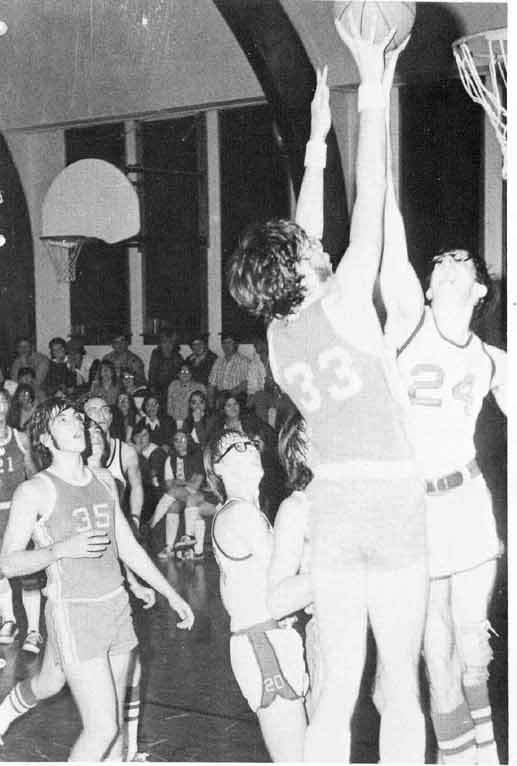
Back to Mark Armstrong’s question: what would you tell your younger self? Well, if I were to go back to, say, 1975, what would I tell the 18-year-old me? I might tell him to give up on the jump shot and drive the hoop in the basketball playoff game at Belmont, so instead of scoring only one point in a loss, he gets his usual 20 or so in a victory, and the team makes it all the way to the state Final 4 in Madison. Or maybe I’ll tell him to avoid taking that calculus class during his freshman semester at UW-Platteville, so he doesn’t get 5 credits of D and instead takes a couple easier courses, gets A’s and his GPA winds up being high enough to get him a higher pay tier when when is hired by the Social Security Administration in 2003.
There are all kinds of things I could tell him about what to avoid, what to do instead of what I actually did. But there would have to be a limit, wouldn’t there? How about my first marriage? Avoid it altogether by not asking that girl out when I meet her in Platteville in 1977…and thus ensure that my two kids and grandson are never born. Maybe I tell him that he should borrow Dad’s car and drive all the way up north, from little Potosi in southwest Wisconsin to a little-bit-larger Chetek in the northwest, and find a certain girl, because she’s the one who will be the love of his life…but maybe what clicked between me and Sue in the early ’90s wouldn’t have clicked some 16 years earlier.
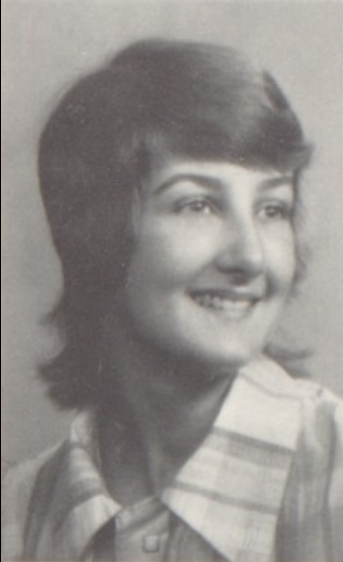

Even more recently, I can think of some times during our early years together when it looked like we might not make it. Every relationship has those kind of bumps, and ours was no different. If I were to go back to the early 1990s and talk to my mid-30s self, would I tell him how to avoid the potholes?
No. Everything happened exactly the way it was supposed to. If I’d made any one of a million or so decisions differently back from age 18 into my mid-30s, would things have turned out any better? I don’t see how, and conceivably they could’ve been worse.
Having said that, my next book will be about a guy who wishes he could go back and change his younger self’s mind about a decision that cost him the love of his life. He can’t go back, of course, but one day he finds a five-year-old letter that he never opened, and inside is his chance to redeem himself, correct his mistake and maybe, just maybe, recapture his long-lost love. I call it The Dance We Shared.

I’ve sometimes thought of what my life would be like if Sue and I had never met…or worse yet, if I’d lost her, thanks to some lame-brained decision on my part. I never would’ve forgiven myself, and I suspect it would’ve played havoc with any subsequent relationships I might’ve had. There’s no doubt in my mind that a higher power played a significant role in bringing us together and keeping us on course in those early years. There were one or two occasions, even, when it was almost like God was saying, “You two are destined to be together, so here’s what you’re going to do.”
Would I tell my younger self to change any of the decisions he was going to encounter in the years ahead? No, he had to find things out for himself. Sometimes that means you find out the hard way. You have to experience hardship and pain in order to appreciate the successes and good times that will happen if you persevere. As my father once told me, “The sharpest steel is forged in fire.”

 A Strenuous Writer's Life