It’s the fourth day of the New Year as I write this, enjoying a fire crackling in our stove, with my wife Sue at work on her own laptop at the same table as me. A travel agency owner’s work, I found out long ago, is never really done, and on weekends she’ll spend several hours working for clients whose cases couldn’t be finished up during the regular work week.
A writer’s work is never really done, either. One project leads to another, and there’s always something waiting out there. Today, for example, I spent about an hour researching and writing the weekly newsletter for Sue’s office. (Ghostwriting it, actually, as her name is on the newsletter as the author. Don’t tell anybody.) I sent a message to Jenna, my cover model for the White Vixen books, about doing a shoot for the new book, The Silver Falcon, which is still on schedule for launch on March 1. I scanned through my never-ending email in-box, deleting some and saving others. This was after a morning spent in nearby Rice Lake, lifting at Olympic Fitness Center and attending a spinning class there–and I can assure you, a 50-minute spin class is no easy ride when you’re just a few weeks out from foot surgery. Then we got a few groceries and stopped for chai tea and two of Heather’s delicious scones at Badger Brew Coffee.
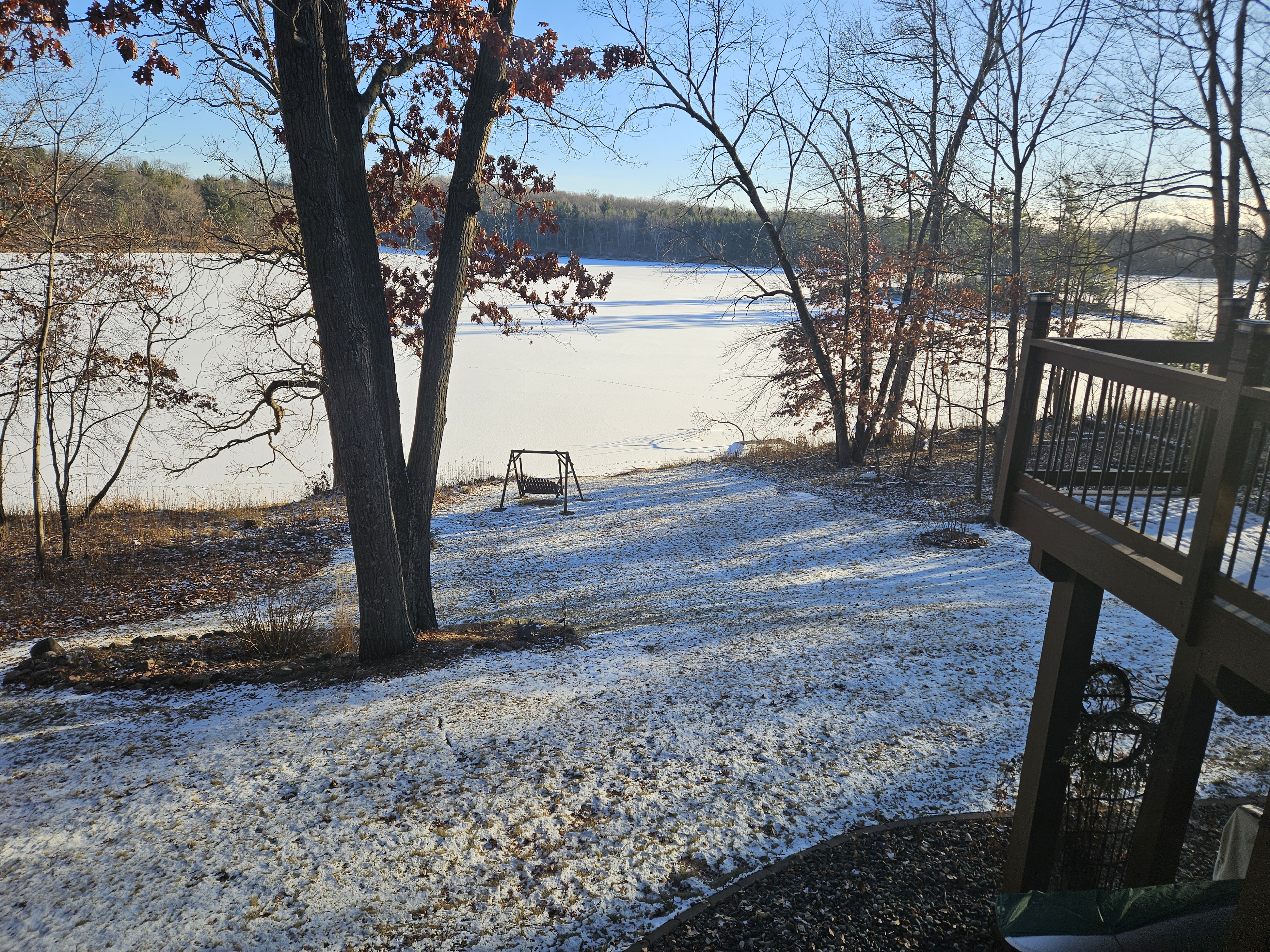
It’s a non-typical early-January day in northwest Wisconsin. The temperature is pretty typical: 8 above zero at the moment. But we have only a dusting of snow on the ground, which is definitely not the usual amount for this time of year. A major storm is roaring across the country well to our south, and while I’m not necessarily a big snow-lover, we could use more snow up here. I don’t snowmobile or ski or ice-fish, but there are a lot of people who do, and a lot of businesses up here rely on their patronage during the winter months. The winter of 2022-23 was a good one, plenty of snow for recreation and then ample spring runoff for our lakes, but last winter was one of the warmest on record for Wisconsin. The predictions were for a return to normal this winter, but so far that’s not happening. Maybe we’ll get hammered next week; if that happens, I’m liable to be grumbling about it as I shovel the stairs and deck outside.
Good riddance to 2024.
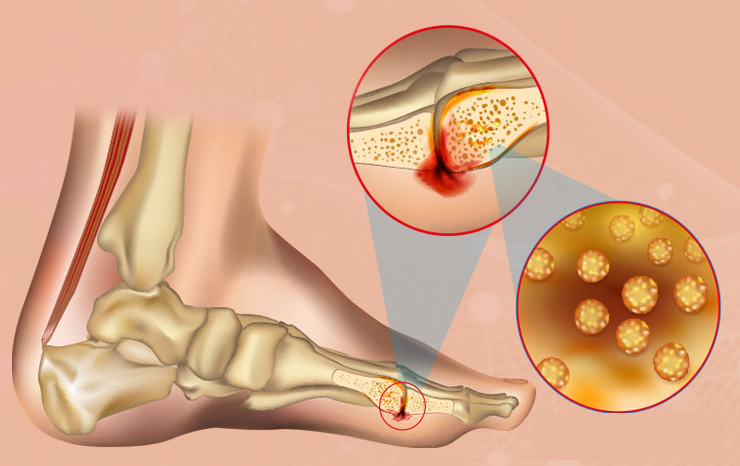
The calendar turned to 2025 for all of us the other night, and I can truly say that I was glad to see it end. As you know if you’ve followed this blog, the year was filled with unexpected medical challenges for me, culminating with the amputation of my left big toe on December 11. This was the result of a serious infection I contracted while we were hiking up Mt. Kilimanjaro in Africa two months earlier.
Had we been able to treat the blister right away, especially in a U.S. hospital, the toe might very well have been saved. But we were above 13,000 feet on an African mountain, and we did what we could with the first-aid materials we’d brought along. A nurse looked at it in Nairobi, before we began our safari, and provided additional antibiotics and better bandages, but it was still a couple more weeks before we returned home and let my doctor have a look. By then it was too late. The upper half of the toe was taken on November 13, and when additional tests showed the infection had spread to the bottom half, the stump had to come off. You don’t mess around with osteomyelitis.
I keep myself grounded through all this by reminding myself that it could be a lot worse. On the morning I found out from the podiatrist that the infection had spread into the rest of the toe, requiring more surgery, I saw a People magazine article about actor James Van der Beek, diagnosed with 3rd-stage colorectal cancer at age 46. A year later, he’s going through treatment and has a positive outlook. And just the other evening, we attended a reception for a member of the Rice Lake business community whose own recent cancer diagnosis was even more serious. Our friend will almost surely not live to see 2026, but he spent hours welcoming people, shaking hands and chatting and getting lots of hugs as the community turned out to show him their love and support. So, in light of what just those two gentlemen are going through, my struggles have been small potatoes.
Our climb of Kili was unsuccessful, as I wrote about in a previous post, To the Top of Africa…almost. If the toe hadn’t developed that blister, if I hadn’t still been dealing with the effects of the April surgery on the other foot to repair a torn tendon, if I hadn’t had a fungal infection of the lungs over the summer…there are always a lot of “ifs” for something like this. Many people have asked me, since our return, if I regretted making the attempt, considering that we failed in our goal to reach the summit. I say no, I have no regrets. We gave it our best shot, dealt with very difficult conditions to the best of our ability, and survived to tell the tale. Yes, we could’ve canceled the climb and just done the safari, which would’ve meant I’d still have my big toe today. Maybe we would’ve rescheduled the climb for the fall of ’25, but then what if something else comes up? Considering our age–we were the oldest of the 15 people on the climb by at least 15 years–our window for this type of adventure was closing.
One thing I didn’t want to do was put Kilimanjaro on my list of things I’ve always regretted not doing. Fortunately, it’s a fairly short list. Right now, there are only two things on it: I never joined the military, and I never played college basketball. Like every American, I had a chance to serve my country in uniform coming out of high school, or even later, but I chose not to. I rationalized by saying that I wanted to get my college degree and start my career in broadcasting as soon as possible, and a two- or four-year hitch in the Army or Marines, my two preferred branches, would’ve delayed that. In hindsight, it probably wouldn’t have made much of a difference, and I might’ve been able to get into Armed Forces Radio, which certainly would’ve helped an eventual radio career as a civilian. The other regret, turning down college basketball, goes back to my freshman year at UW-Platteville. I could’ve made that team, or at least played on the JV squad for a year to see if I could take my game to the next level, as one or two guys I knew did. I never would’ve been a superstar, but on that Pioneers team of the late ’70s, which I saw play many times, yeah, I could’ve played.
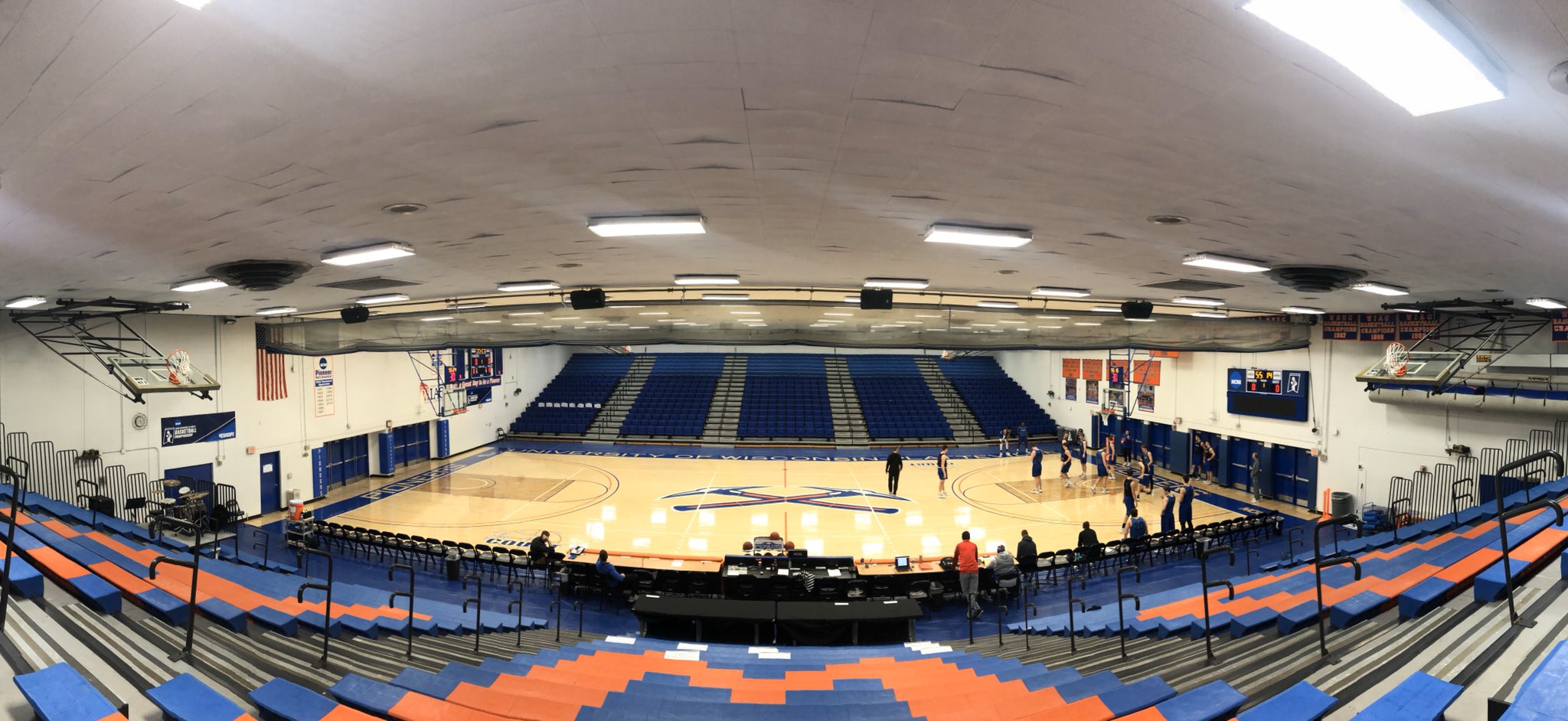
My decision to decline a tryout for the team back in the fall of ’75 was because I wanted to broadcast the games, and my future was in broadcasting basketball, not playing it. But like that choice about the military, the reasons I told myself, and what I told other people, weren’t the full story. I was afraid of the physical and mental challenge of military service, and of college basketball. In those days, I was sliding into a take-the-road-less-challenged type of mentality. That didn’t do me much good, in my professional or personal lives, and it took me many years of struggle before I finally started turning things around. That really took off when I met Sue in 1991.
Military service and college athletics are two of those things that come around for someone only at certain times, and if you don’t seize those opportunities when they present themselves, they never come again. Many other things can be done later on in life, but not those two, not really. And although I’ve read of people in their late 70s and even 90s climbing Kili–certainly on an easier route than the one we chose–it’s a lot easier when you’re in your 50s or younger. Even with that, several of our group, who were much younger than us, didn’t make the summit, either.
So no, I don’t regret the climb, even though we didn’t make the summit. It would’ve been very difficult even without the medical issues. The eight climbers in our group who did summit were a beat-up, weary bunch when we saw them back at the hotel in Moshi, some 36 hours after their success. None of them spoke of having a profound, even spiritual experience on the top. What they did talk about was the exhaustion, the bone-chilling cold, and the depressing realization that they faced another 6-hour climb to get down and then another 5-6 hours to reach the next overnight camp. We heard the word “brutal” used a lot.
On New Year’s Day, as I reflected on the year just past and my hopes for the new one that had just begun, a visit with an old friend helped me put it in perspective.
Knocked down, but not out.
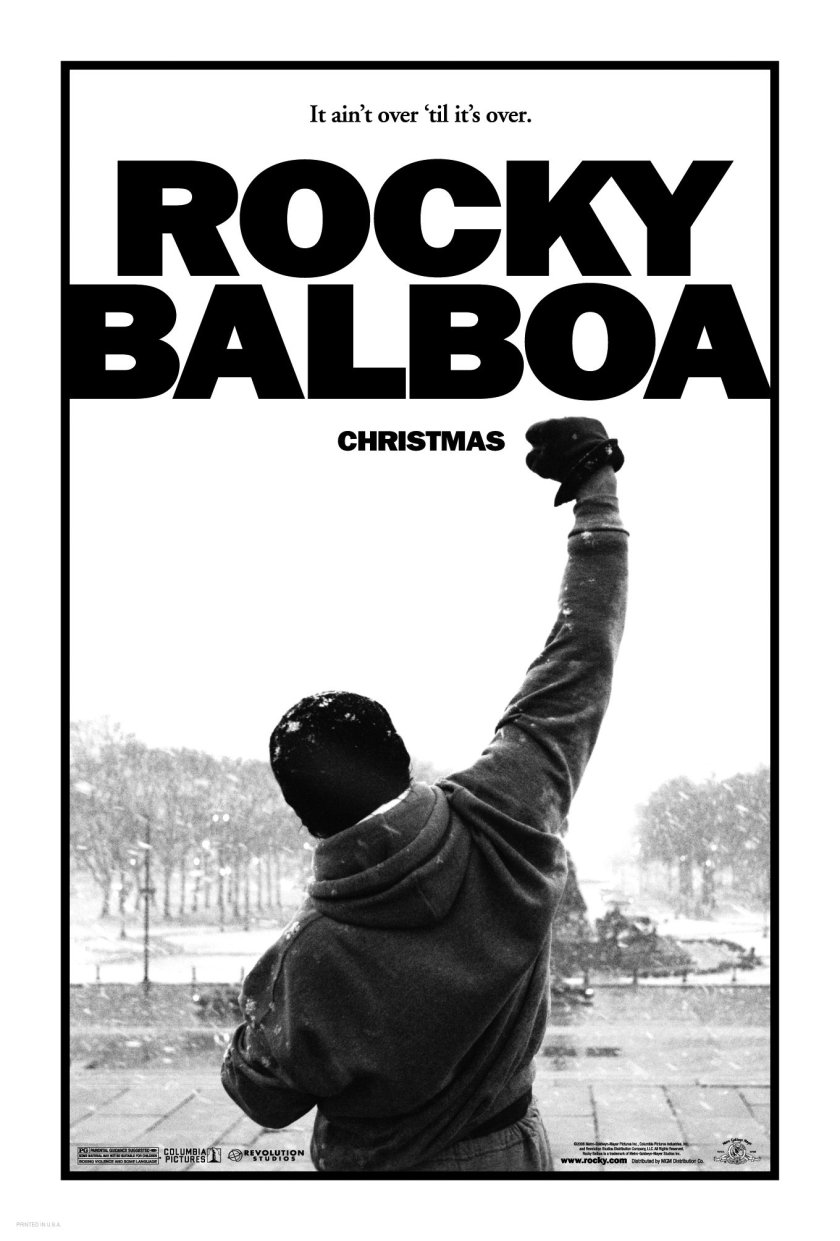
Regular readers of this blog know that I’m a big fan of the Rocky films, and have written about them before: Yo, Rocky! One of the cable channels was running a “Rockython” on New Year’s Day. Not particularly interested in the football games that day, I caught the second half of Rocky Balboa, the sixth film of the series and the last one in which Rocky actually gets in the ring. He’d make an appearance in Creed a few years later as the trainer of Adonis Creed, the son of Rocky’s late ring-nemesis-turned-friend, Apollo Creed. Sylvester Stallone would get an Oscar nomination as Best Supporting Actor for that one, but in Rocky Balboa, he was in top form, both as actor and director.
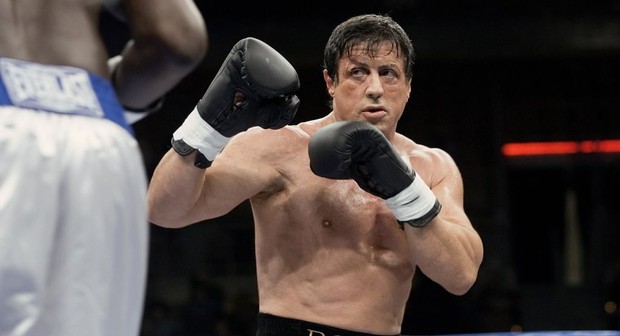
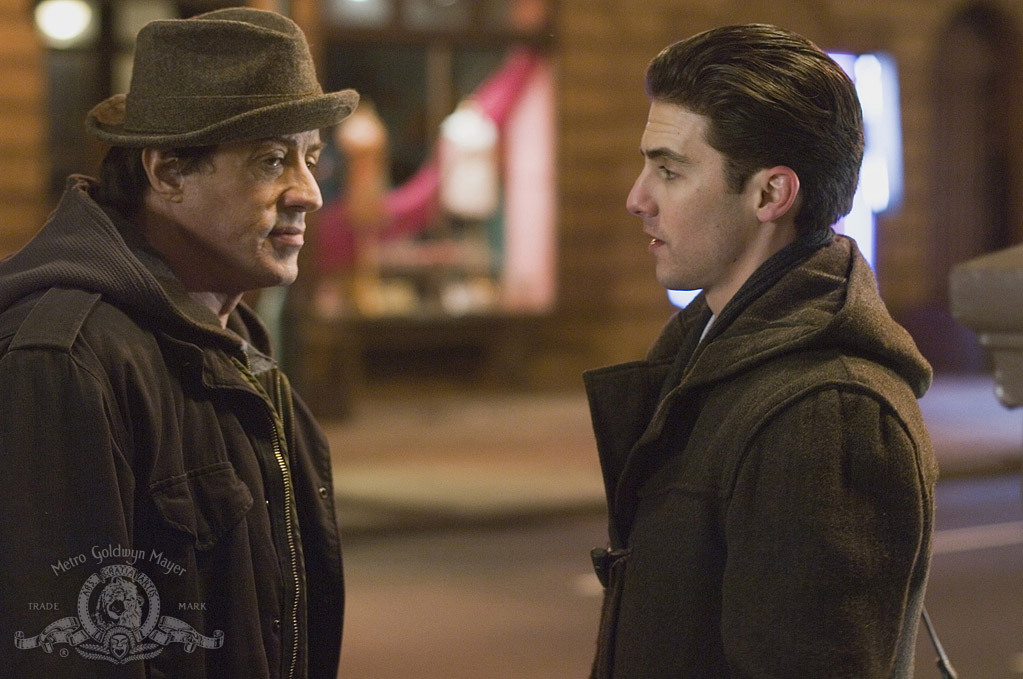
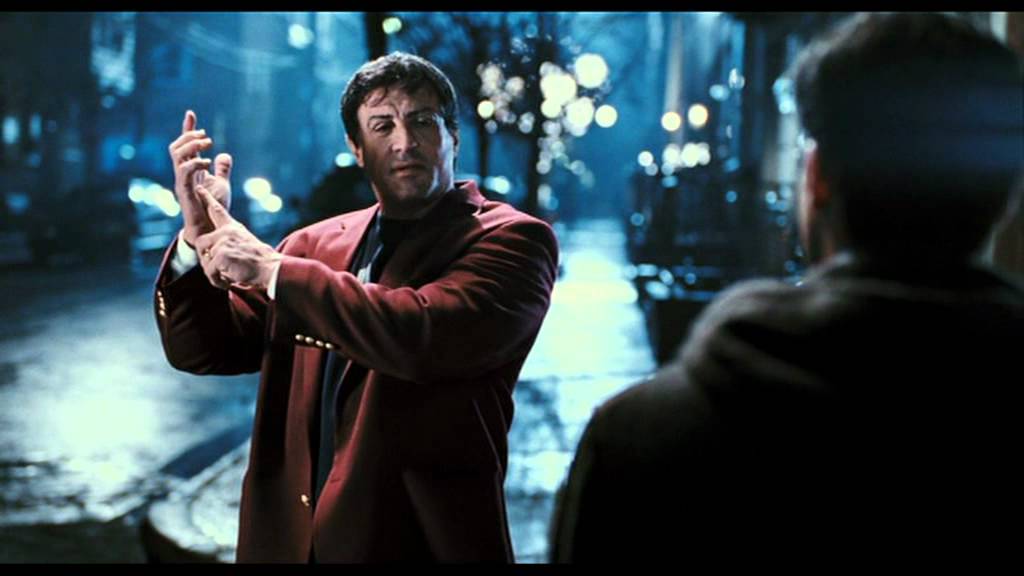
The film, released in 2006, has many memorable scenes. Rocky is mourning the death of his beloved wife Adrian to ovarian cancer. Their only child, son Robert, is having a hard time establishing himself in a career, due to the constant pressure (or what he perceives as such) of being the son of the legendary heavyweight champ. This leads to the film’s most memorable non-boxing scene, in which young Robert confronts his father and begs him to back out of the fight: Rocky schools Robert about life. Then there’s Paulie, Adrian’s older brother, a hanger-on throughout the entire series who’s with Rocky from beginning to end. There’s Marie, the single mom who’d met Rocky as a child and now re-enters his life–not romantically, which actually added to the film’s charm, but as a friend and hostess at his restaurant. Even a dog, whom Rocky rescues from a pound and names Punchy.
In the film, Rocky decides to re-enter the ring to fight some exhibition bouts for charity, but the reigning heavyweight champion, Mason “The Line” Dixon, played by real-life light-heavyweight champ Antonio Tarver, wants a piece of Balboa after ESPN runs a computer-simulated fight that shows him losing to Balboa in a straight-up, both-in-their-prime match. Stallone was able to film the pre-fight press conference and the fight itself at the Mandalay Bay Resort in Las Vegas, piggy-backing an actual fight and broadcast by HBO. The first two rounds are presented as they would’ve actually been on a real HBO fight, with real announcers, led by Jim Lampley, which only added to the visceral impact of the fight on the viewer. The crowd for the real fight was invited to stick around for the movie scenes, but not coached; when they saw Stallone entering the arena as Rocky, they leaped to their feet and started roaring his name, adding to the realism.
It was very emotional for me to watch this film again. I’d originally seen it when it premiered in theaters during the Christmas season of 2006, with my son Jim, who was home from his freshman year in college. The theater crowd, I remember, reacted like a typical Rocky crowd when the fight began, cheering and yelling encouragement for the hero.
But here was Rocky, battered and beat up at 60, a widower, estranged from his son, and even with all that, he “kept on goin’.” During the training scenes, when he’s put through the paces by Creed’s old trainer, Duke Evers, I could relate to every grunt and groan and gasp of pain Rocky experienced as he pushed his body way beyond what any 60-year-old man should reasonably experience. Just months earlier, I had overcome surgery and sickness and a pulmonary embolism that nearly killed me, putting in hours in the gym and the pool and on the trail, getting ready for what would most likely be the last big physical challenge of my life. I knew exactly what Rocky was going through, and as he was pushing through the pain and the sweat with his ultimate goal in mind, I was pushing right alongside him.
As he tells his son in their memorable confrontation, you have to “keep movin’ forward.”
Let me tell you somethin’ you already know. The world ain’t all sunshine and rainbows. It’s a very mean and nasty place, and I don’t care how tough you are, it will beat you to your knees and keep you there permanently if you let it. You, me or nobody is gonna hit as hard as life. But it ain’t about how hard you’re hit. It’s about how hard you can get hit and keep movin’ forward, how much you can take and keep movin’ forward. That’s how winnin’ is done!

One of the many frustrating things about last year’s medical issues was that they kept me out of the martial arts dojo. I’d stopped active training in the fall of 2023, as my sports broadcasting schedule at the radio station filled up. I fully intended to get back to the dojo when we returned from Africa, but then came the toe problems. Now, the toe is gone, the foot is healed and the right foot is coming along to the point where full activity is possible. So, what have I done? I’ve committed to a dozen or so more sports broadcasts at the station for this winter. That’ll all be over in March, though, so I plan to return to Brown’s Karate Academy as soon as I can after hanging up the microphone for what I’m pretty sure will be the last time. (But I’ve said that before…)
But even though I haven’t been inside a karate dojo or taekwondo dojang in over a year, I still remember one of the first things I learned when I started studying taekwondo back in 2001: the Five Tenets.
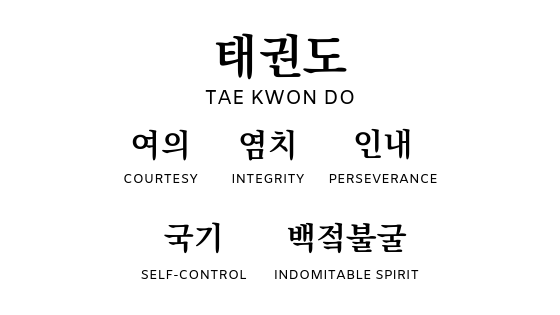
Number 5 has been very important for me in the past year, and combined with prayer and the love of family, especially my fantastic wife, I’m determined to make 2025 better than ’24. I will persevere. I will keep movin’ forward!
 A Strenuous Writer's Life