Originally published in The Chronotype.
The ancient African volcano of Mt. Kilimanjaro has been drawing explorers and climbers since the 19th century. At 19,341 feet, it’s the tallest free-standing mountain in the world, and hundreds of climbers attempt it every year. This was the year my wife Sue and I decided to take our shot at Kili. We knew it would be a challenge, and it turned out to be all that, and more.
You don’t have to be a mountaineer to climb Kilimanjaro; it’s not a “technical” climb, meaning you won’t need special equipment or bottled oxygen. What you do need is to be in top physical condition, engage a reputable outfitter and bring a good pair of hiking boots, a backpack with a water bladder and plenty of determination. You’ll need all of that, along with some luck with the weather.
Sue booked our trip a year in advance, and we chose Ultimate Kilimanjaro, a US-based outfitter with a very good reputation. On October 3rd, we boarded an airliner in Minneapolis, changed planes the next morning in Amsterdam and arrived in Moshi, Tanzania, that evening. We had two days to get rid of the jet lag and meet our fellow climbers, a diverse group representing five countries: the US, UK, Canada, Germany and Australia. We set out by road on the morning of the 6th and in a couple hours were at the Londorossi Gate, already at 7742 feet. There we would begin the Lemosho Route, the longest of the 7 routes but said to have the best chance for summit success.
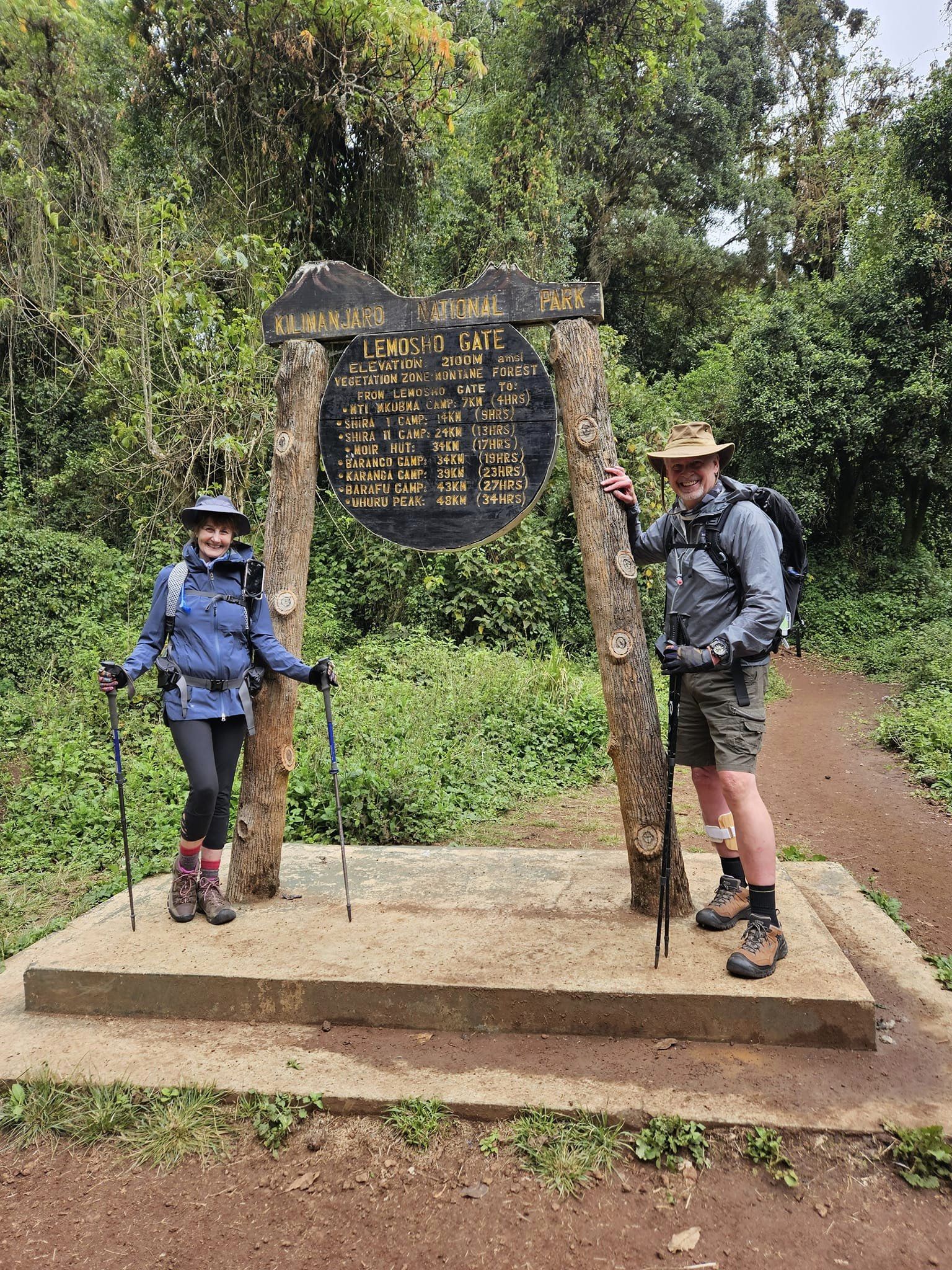
The first day, spent on a relatively easy trail in the forest, went well. My right foot, which had undergone surgery 6 months earlier to repair a torn tendon, was holding up. Sue and I were in top condition thanks to vigorous workouts at Olympic Fitness and 4EverFit. We reached Mti Mkubwa Camp four miles later, gaining nearly 2000 feet of altitude. After a fine meal served by our porters, we climbed into our two-person tent, snuggled into our sleeping bags and fell asleep right away. Day 2 would begin at dawn.
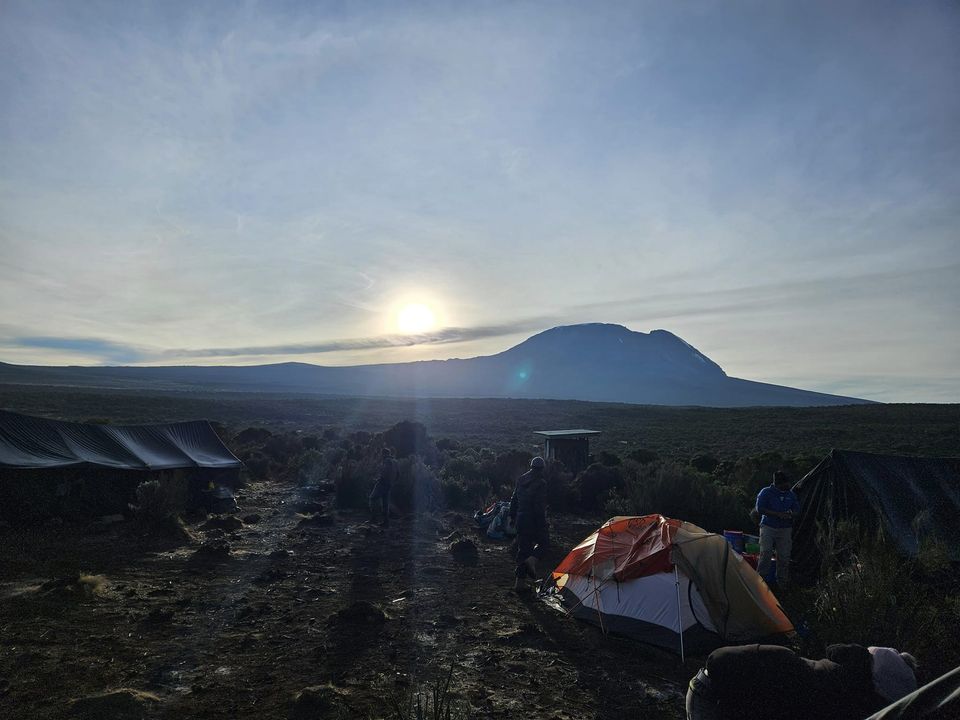
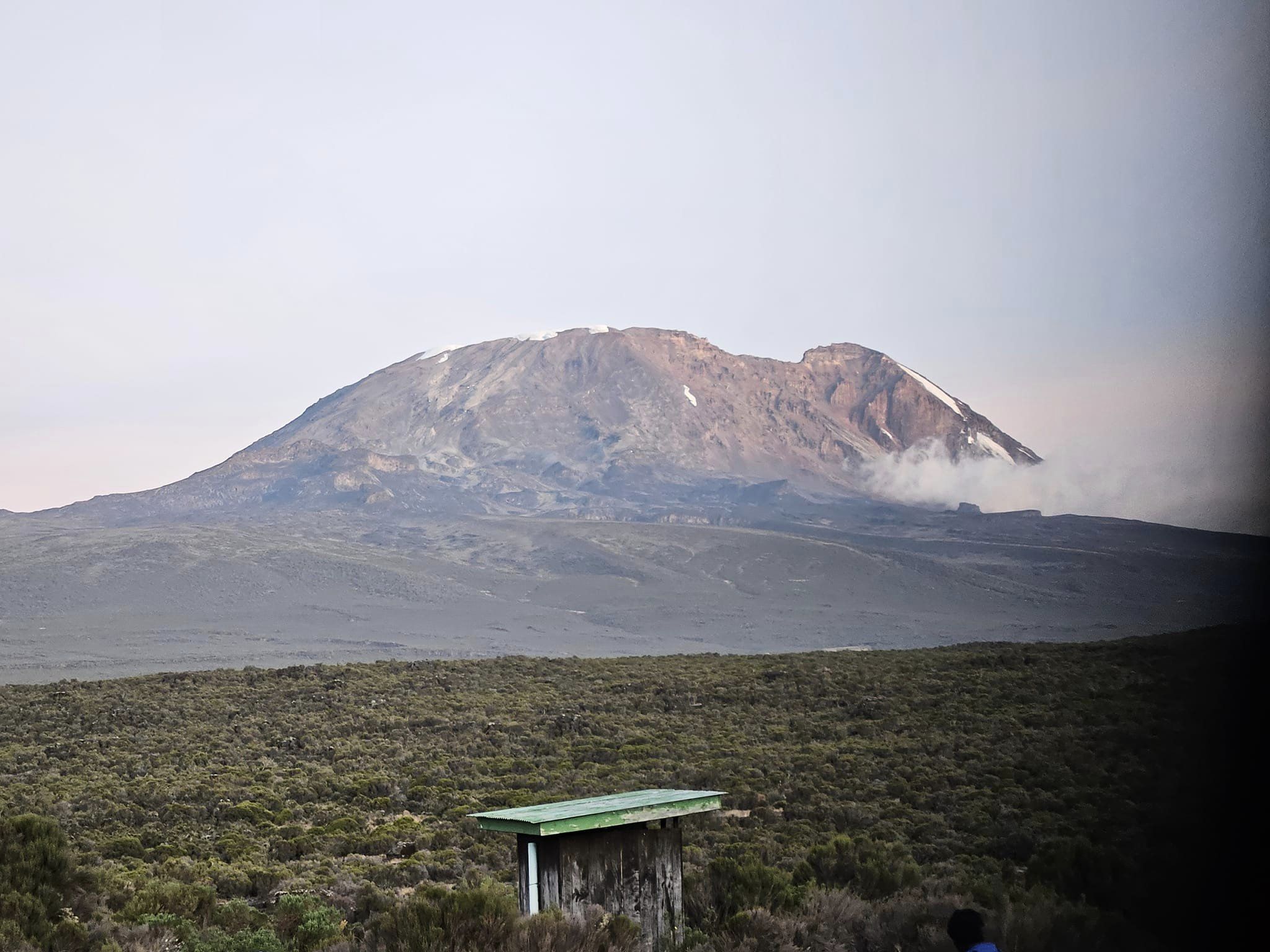
Above the treeline, the trail got rougher; it seemed like every other rock in the world was here. At one point, we had to climb over boulders, unable to go around them. It was a hard 5 miles to Shira 1 Camp, taking us about 7 hours. At 11,500 feet, we got our first look at Kilimanjaro, far in the distance. Day 2 was also the first day we lost a climber; Kristen, from Florida, developed altitude sickness. The next morning, she’d be escorted to the nearest road and driven back to Moshi.
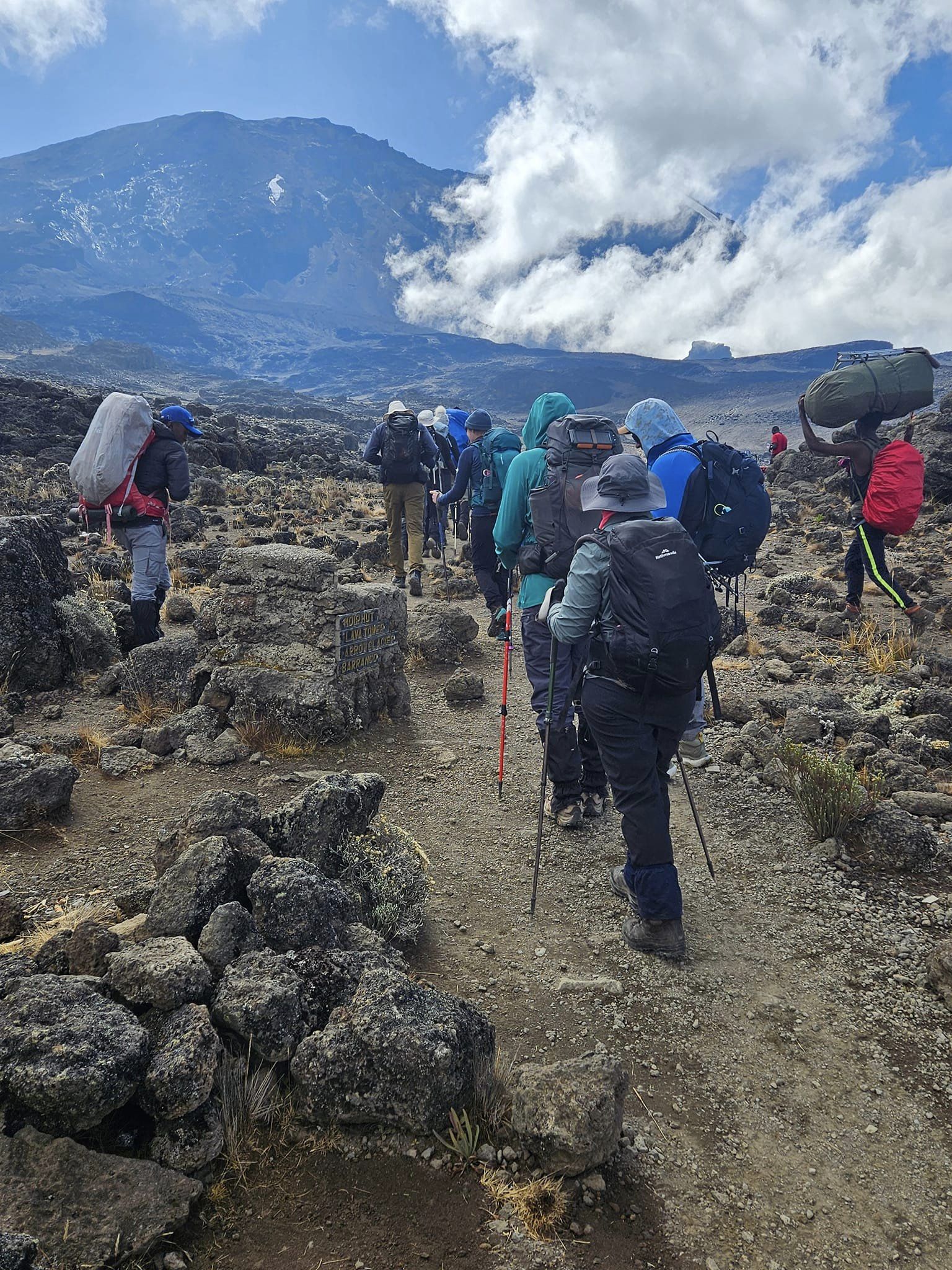
It was more of the same on Day 3, a rugged 7 miles to Moir Hut, at 13,800 feet. The weather was holding, thankfully, and we had plenty of layers to add or subtract as the day went on.
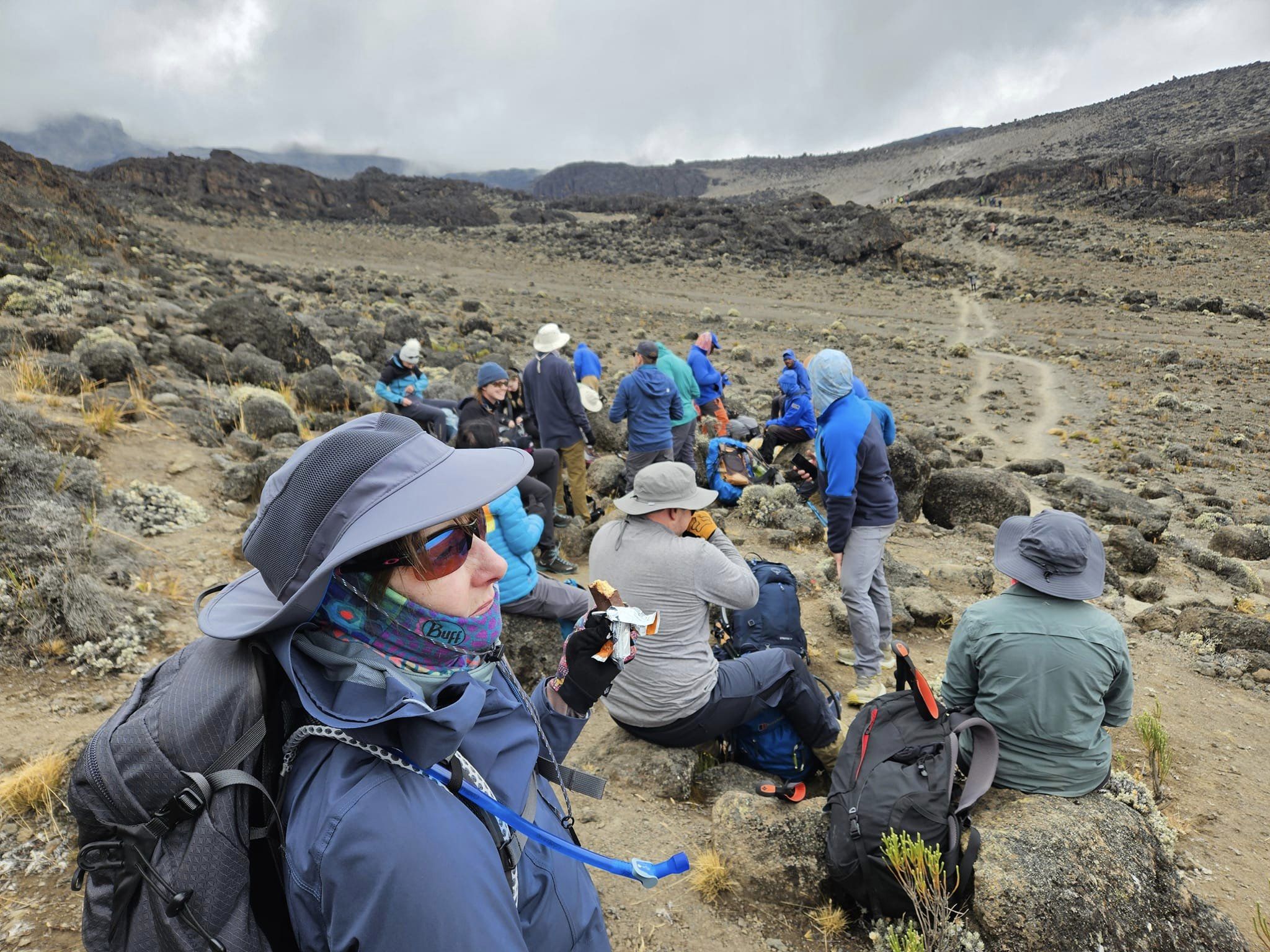
Day 4 promised to be an interesting break from the stark but beautiful landscape. Halfway through the day, we reached the Lava Tower, an ancient formation of lava that rose up out of a volcanic vent, then cooled and hardened. We wouldn’t have to climb it, but we had a nice lunch in its shadow at 15,190 feet. The first rain of the trip arrived as we were eating, accompanied quickly by BB-sized hail. We donned our rain gear and headed for the next camp, which would see us go down to 13,044 feet. In total, we would cover 6 miles.
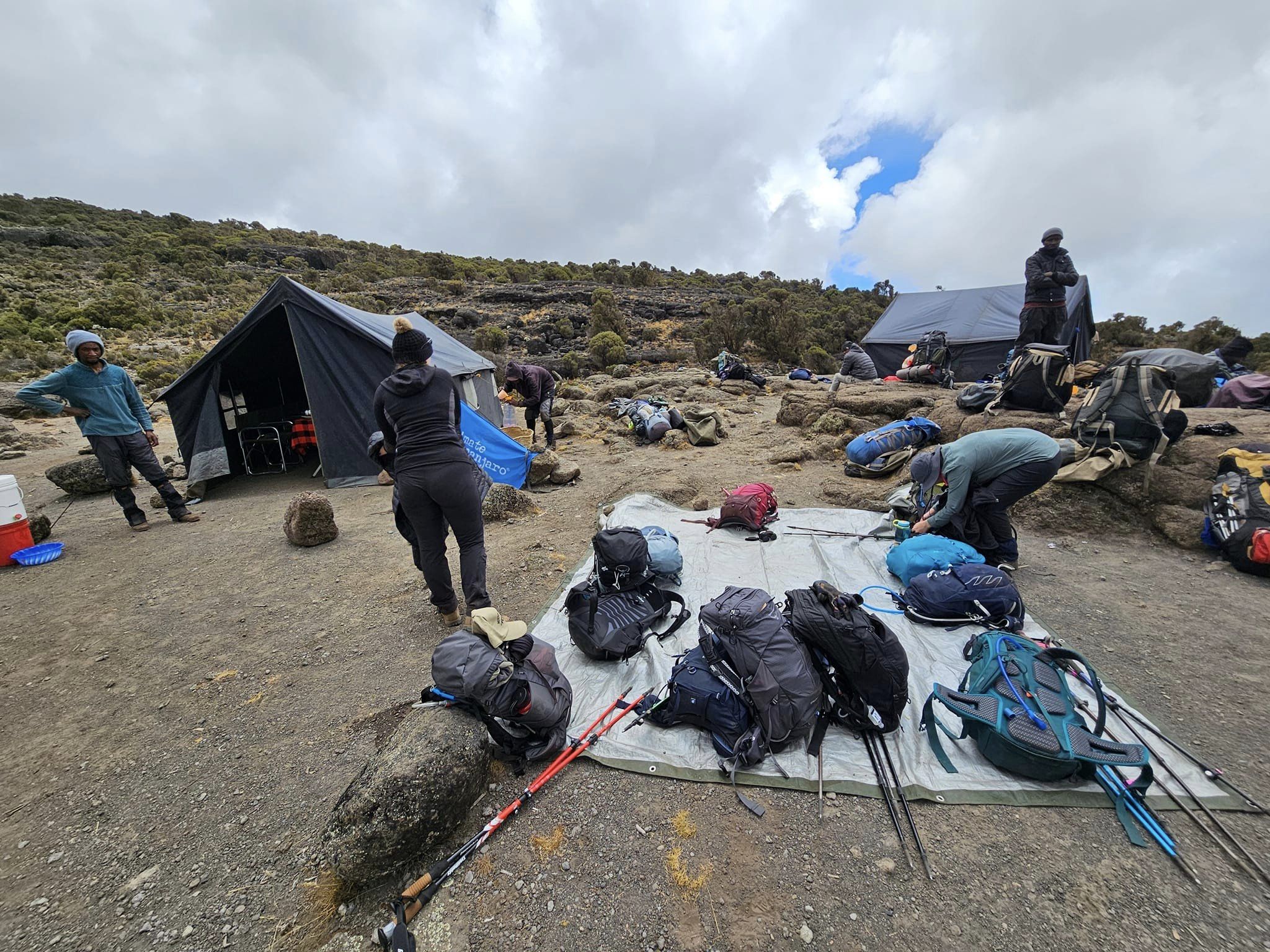
It was at Barranco Camp that we discovered a large blister on my left big toe. We treated it as best we could with our medical kit, and I determined to soldier on, knowing that it was a 2- or 3-day climb to get down anyway, unless we opted for an expensive helicopter evacuation. We decided to keep going, with the next day bringing us our biggest challenge so far: the infamous Barranco Wall.
The Barranco Wall rises nearly 900 feet above the campsite, requiring a near-vertical climb that would see us get close to 15,000 feet at the top. At one point, we had to slide across the face of the “Kissing Rock,” trying not to think of the drop behind us. It took us about two hours to reach the top, but the rest of our group had moved on already. It was just me, Sue and Dan, an Australian who’d suffered what turned out to be a broken foot while walking in Moshi the night before we began the climb.
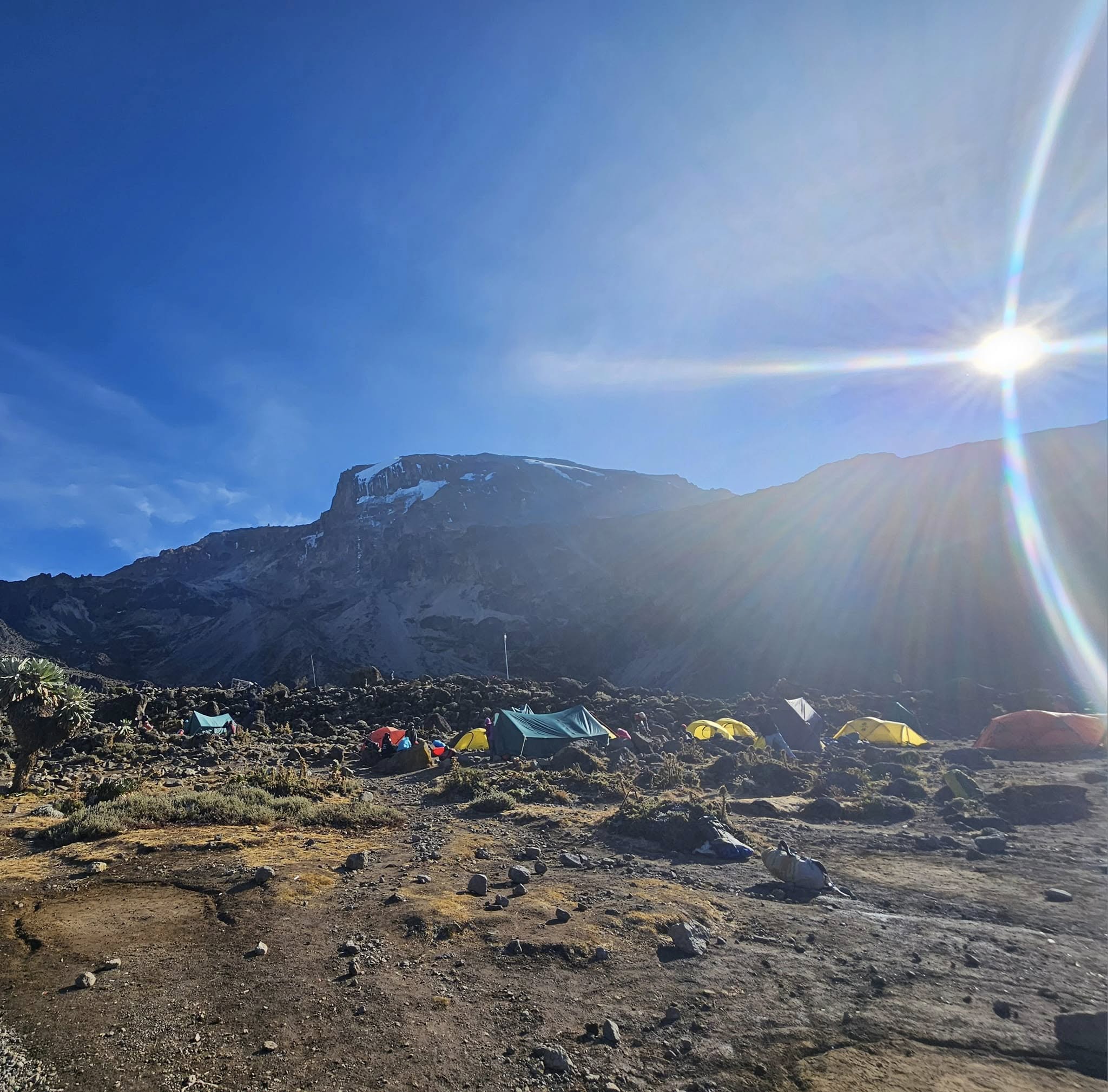
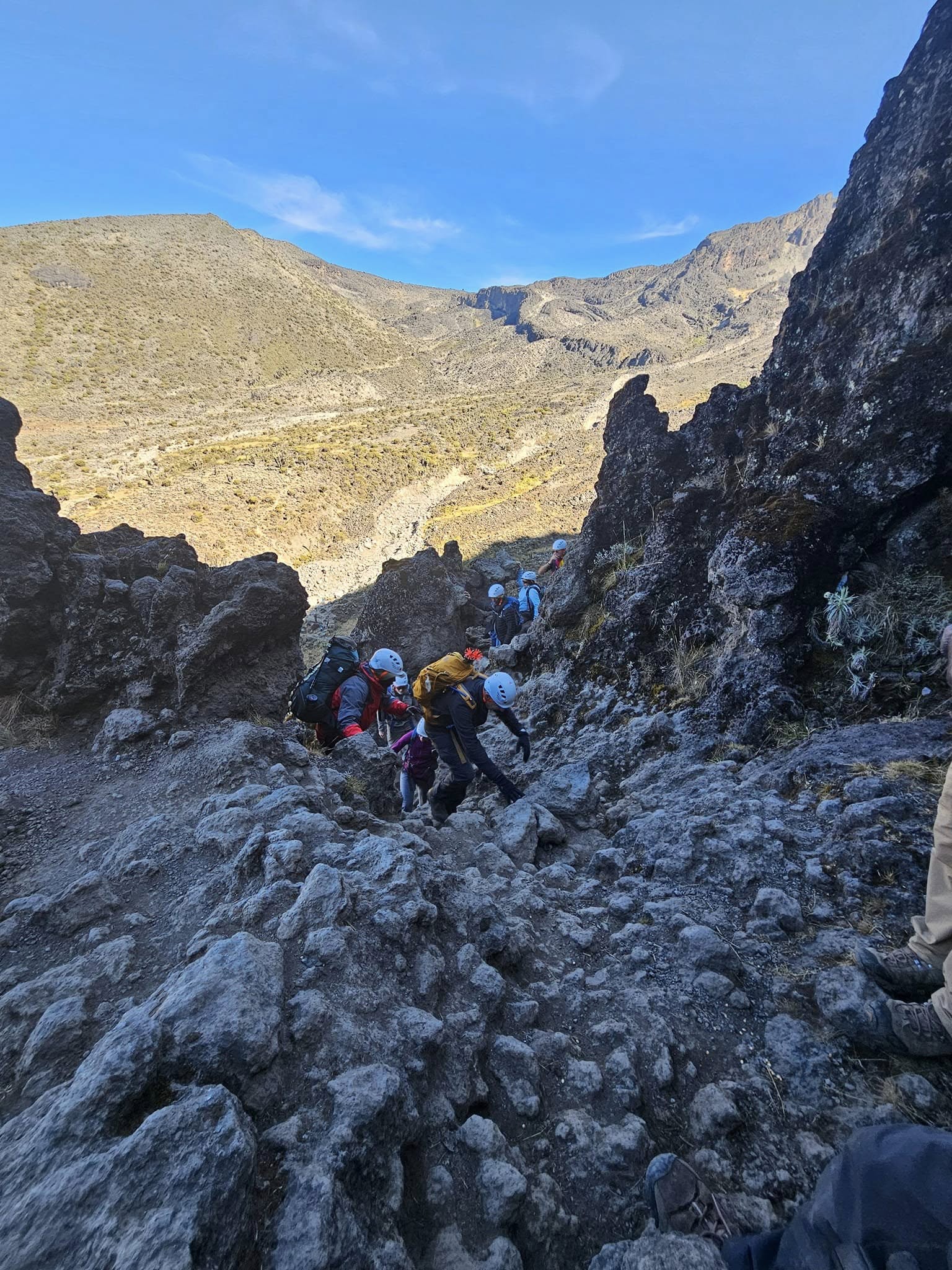
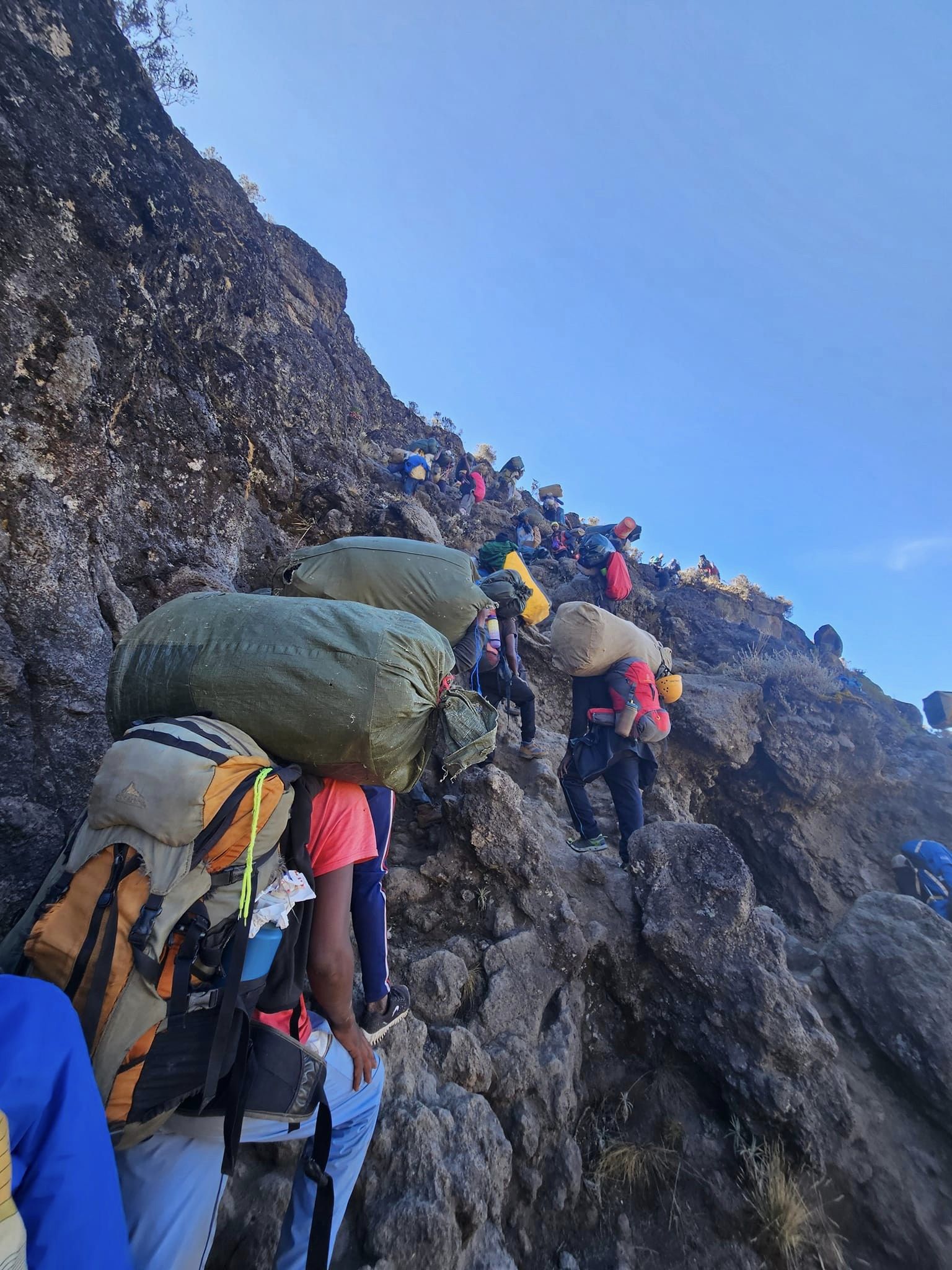
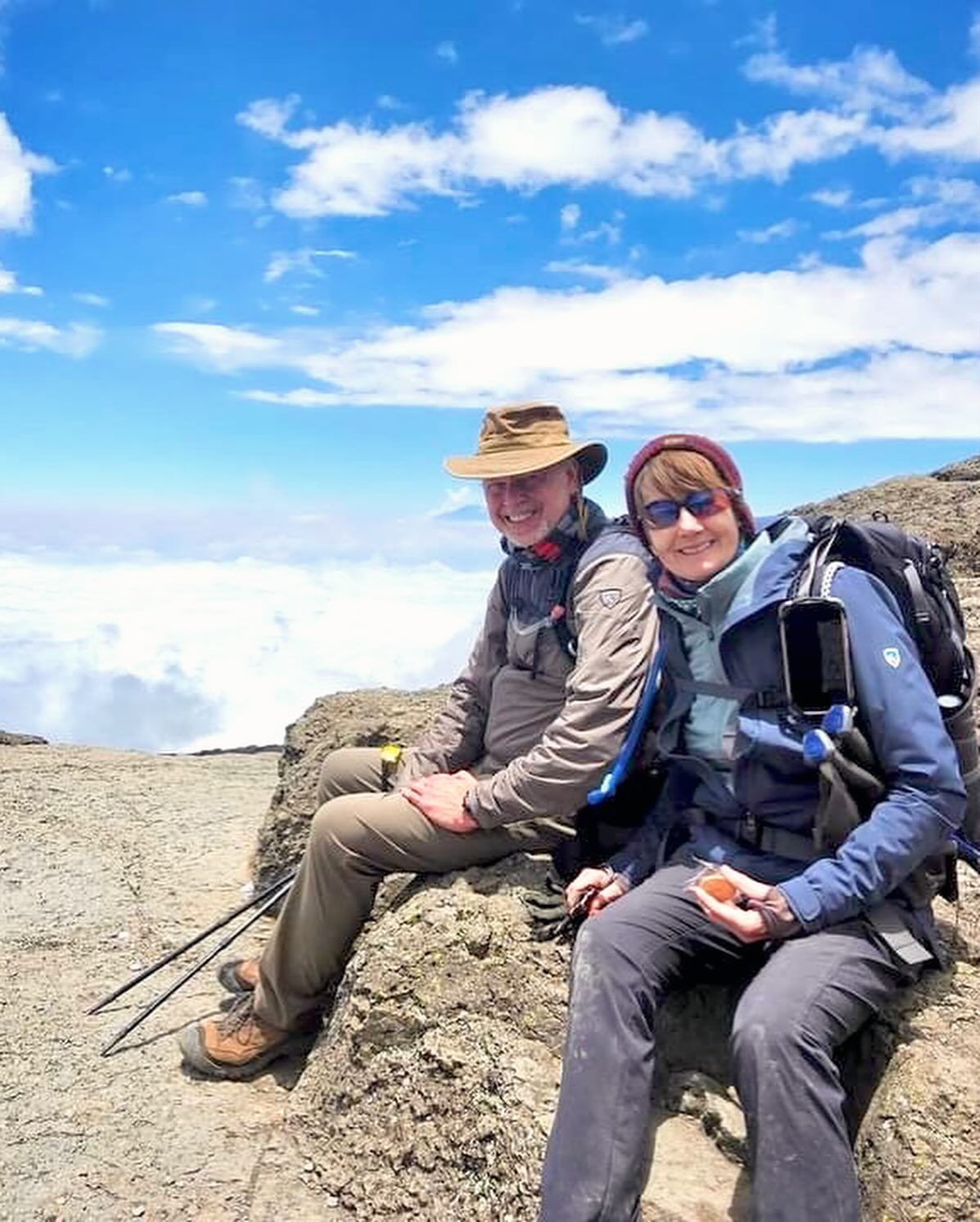
Richard, our chief guide, and a porter stayed with us for the difficult 3 miles to Karanga Camp. We arrived at sunset, but they’d held dinner for us. The next day, the group would go just 2 miles to Barafu Camp, the base camp before the ascent to the summit. We rose that morning with some confidence that since we’d handled the Wall, we could go the rest of the way, but Richard informed us that I had to go back down, taking a short cut to another camp and then down the usual descent route. My repaired foot was not able to keep up the pace. I told him he’d made the right decision. Sue elected to stay with me, and with a guide and a porter to help us, we began the 2-day trek to the exit gate.
They were 2 of the worst days yet in terms of difficult trails, but we finally made it, returning to our hotel in Moshi for our first showers in a week and then 11 hours of sleep. The next day, the rest of our group arrived. Only 8 of the original 15 climbers had made it to the summit, and those who did had to endure a 6-hour climb up in thin air, darkness and icy winds, then another 6 hours down plus 4 more to the camp. The word “brutal” was used a lot.
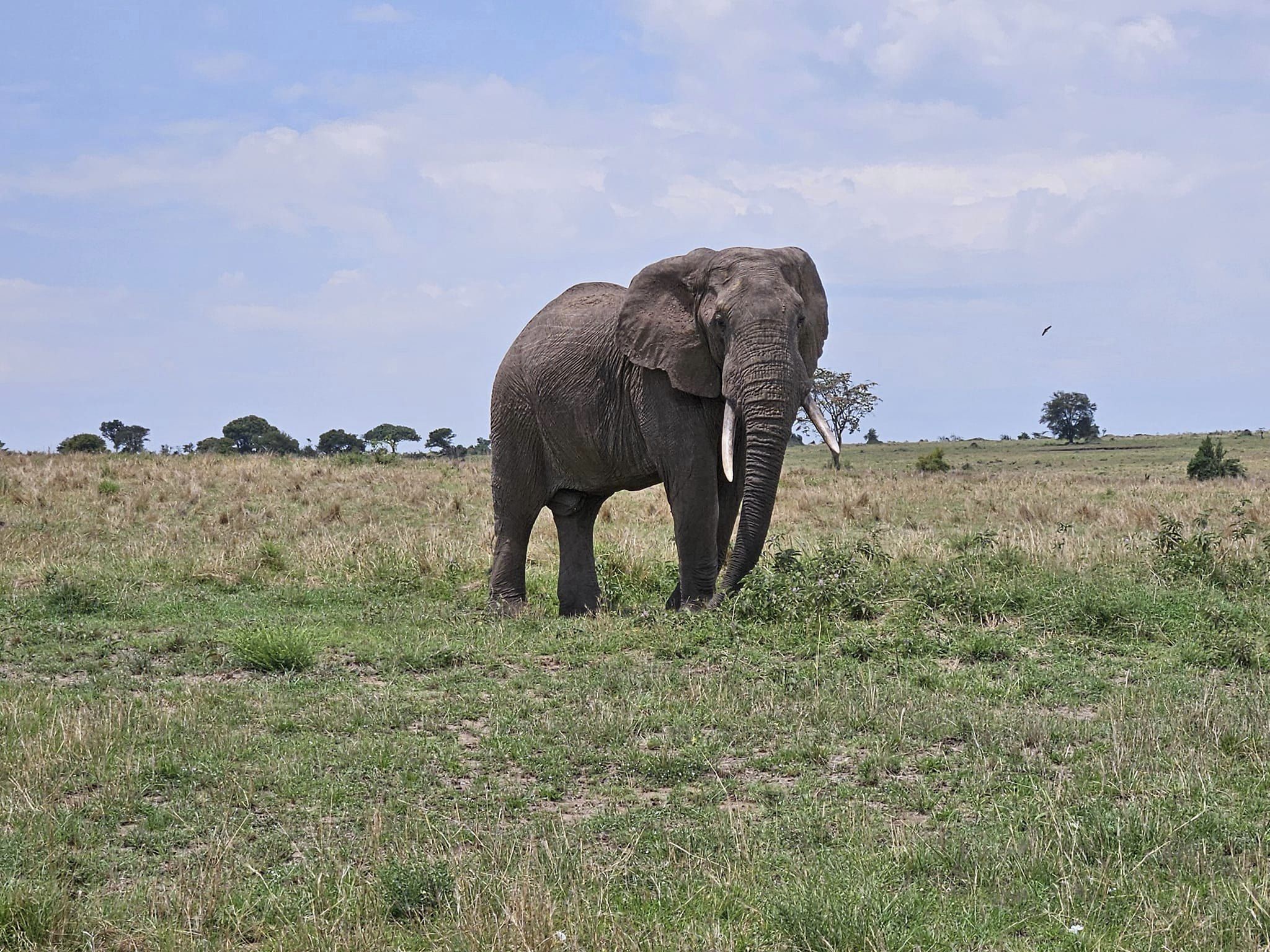
Our Kili experience behind us, we flew to Nairobi and spent 3 nights in the beautiful Fairmont Norfolk hotel, where we met our safari guide and the remainder of our 16-person group, all from the US. From being the oldest on the Kili climb, we were now about in the middle. It was a fun group and our outfitter, Alexander & Roberts, did a great job on the 11-day safari, with stops at 5 different camps in Kenya and Tanzania. We fed giraffes at a rehab center, floated in a hot-air balloon as curious elephants stared up at us, explored habitats ranging from forest to desert and finally the vast grasslands of the Serengeti. There were lots of animals, and we got up close and personal with many of them.
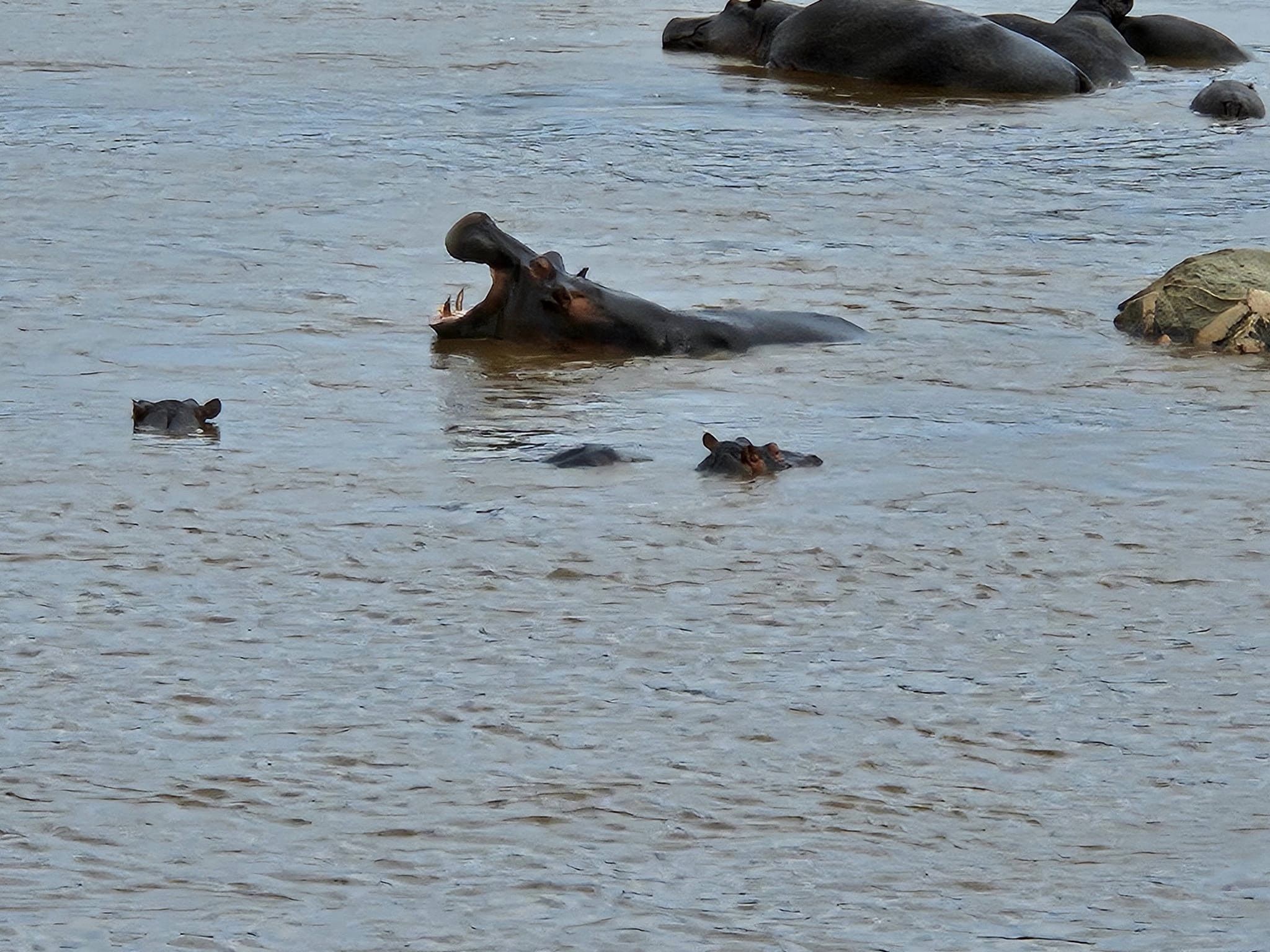

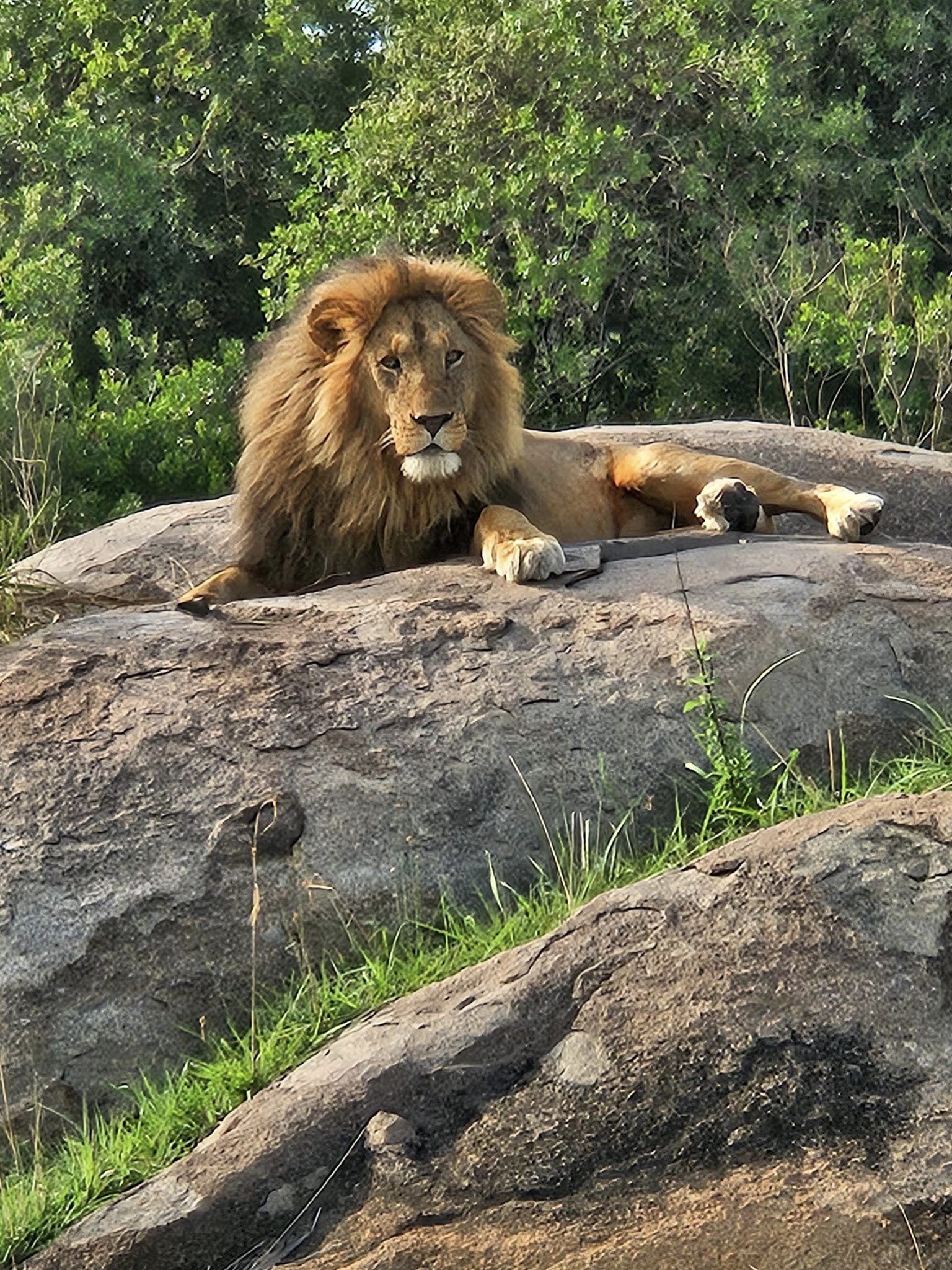
Meeting the people of Kenya and Tanzania was one of the best parts of our trip. Without exception, they were friendly and helpful. They really like Americans, and not just because we come there and spend our money; they spoke highly of hospitals and schools that benefit from US philanthropy, of wells we’ve dug in villages, of our military support against Somali pirates. We even visited a Ma’asai village and got invited inside a home.

We finally started for home on the 28th, well-satisfied with all we’d seen and done on the trip but really happy to be returning to Wisconsin. We had challenged ourselves on Africa’s tallest mountain, saw much of God’s most magnificent creation, and met many interesting people. Will we take another shot at Kili? No, our climbing days are done. We gave it our best shot, and that’s all anyone can do. There are more challenges out there, but as Sue said, our next trek will be on bicycles.
 A Strenuous Writer's Life