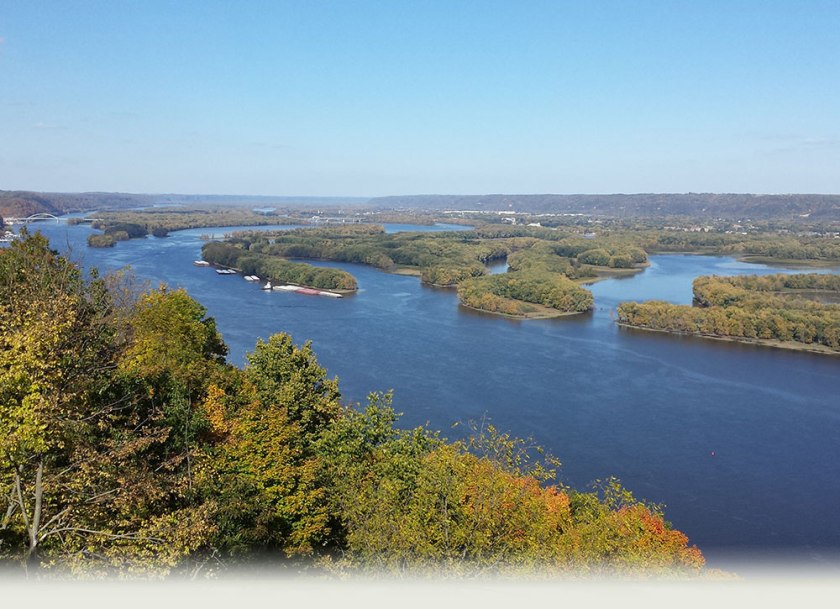
I grew up on the Mississippi River, in the little town of Potosi, way down in the southwest corner of Wisconsin. We didn’t move there until 1968, when I was 11 years old, but the river and I had become acquainted several years earlier. My grandparents all lived in Platteville, just 15 miles away, and I frequently went fishing with my granddads and my father on the Mississippi. My Grampa Tindell, in fact, had a small mobile home in the village of McCartney, halfway between Potosi and Cassville. We always called it “the trailer,” and there were a lot of days when I would cast off from his little homemade dock in the creek that came in from the river, and off we’d go aboard his flat-bottom boat, powered by a 15-horse outboard.
Those were great days.
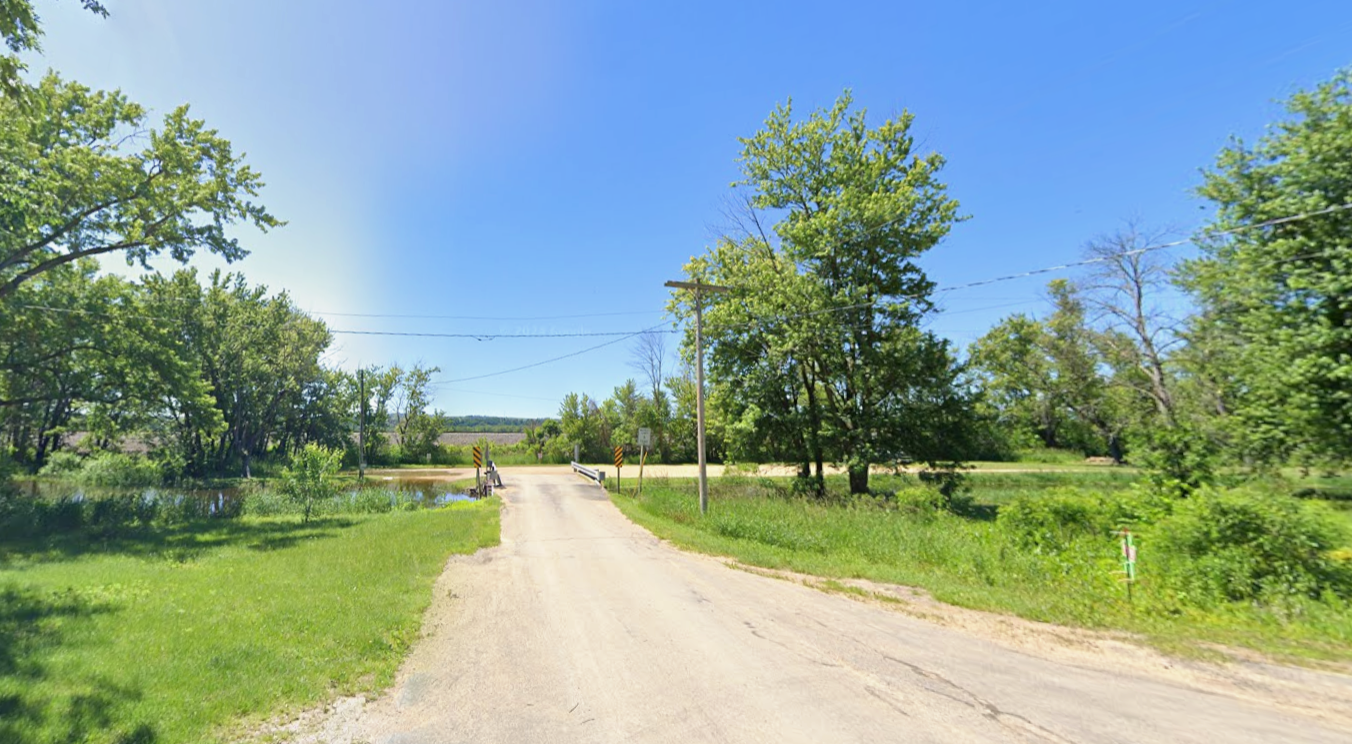
Nowadays I live about 200 miles to the north, and don’t get down to Grant County that much. After my last grandparent died in 2004, my visits became even less frequent, usually just one or two per year. Then maybe once every other year. Until a couple weekends ago, I hadn’t been back for two whole years, which is, I think, a record.
It’s not like it used to be, of course. In the late ’60s and early ’70s, I had a grand total of four grandparents, six pairs of aunts and uncles and 16 cousins living in or near Platteville. Now, I’m down to an aunt and uncle in Cuba City, ten miles to the south, and my dad’s only surviving sibling, his sister Pat, who’s in a nursing home in Platteville. Maybe there might be one or two cousins still around, but the last time I saw any of them was at the funerals of my dad’s sister Alice Williams in early 2019 and my mom’s brother-in-law, Chuck Witz, three years later.
The weekend after Labor Day, I went back down to Platteville to sell books at Dairy Days, and the memories of the river came back. So strong, in fact, that for a brief moment, I even considered moving back.
The Driftless Region.
Thousands of years ago, most of Wisconsin was covered by a glacier. When it retreated, it left a few hills and a lot of holes that became our lakes. But there was an area of our state that the glacier didn’t get to, and today we know that as the Driftless Region. Also known as Bluff Country or the Paleozoic Plateau, it covers some 24,000 square miles of southwest Wisconsin with slices of southeastern Minnesota, northeast Iowa and even a bit of Illinois.

Unlike the rest of Wisconsin, which is generally pretty flat and dotted with thousands of lakes, many of them connected by streams and small rivers, the Driftless Region is characterized by rolling hills, valleys known as “coulees,” and streams that all flow toward or directly into the Mississippi or Wisconsin rivers. The larger rivers tend to be bordered by bluffs, which provide magnificent views, not to mention challenging hiking trails and great locations for private homes. On the Wisconsin side of the Mississippi, the counties of Grant and Crawford provide some truly spectacular bluffs, which we all took for granted when we were kids. Now, we really appreciate them, and many’s the time I wondered how it would be to actually live on one of those bluffs, with the river outside my window every day.
The old hometown.
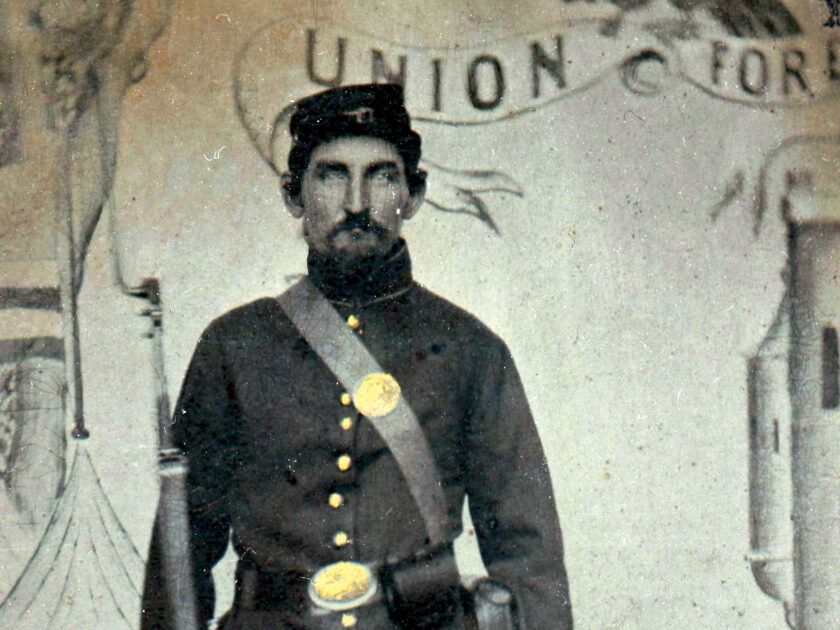
Platteville is a town that owes its existence to lead mining, which was a major part of the economy of southwest Wisconsin from the time of statehood in the mid-19th century into the early 20th. The story goes that a European journalist observed lead miners digging into the sides of hills “like badgers,” thus giving our state its nickname. My grandfather and his father both worked in the mines. William Tindell, my great-great-grandfather, left the mines near Beetown to join the Union Army in August 1864. His brother and a cousin went with him. Their regiment, the 43rd Wisconsin, trained at Camp Randall, where the Badgers’ football stadium stands today, before being deployed to Tennessee, where they saw some action while guarding rail lines. Fortunately, William made it back home healthy enough to sire the line that led to me, nearly a century later. The regiment lost only one man in combat, but 74 to disease.
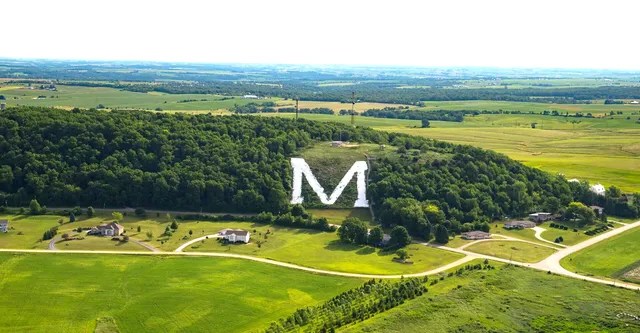
One of Platteville’s many traditions is Dairy Days, and for the second time in three years, I drove down to sell books at the festival. I’d had a good day selling in 2022, but business was down this year, and that was across the board at the craft fair, from what I could see. Still, I was able to spend some time looking around town, making my obligatory drive past my grandparents’ houses and having breakfast a couple times at Badger Brothers Coffee, on Main Street. The downtown has changed quite a bit since I was a kid, when I would walk the four or five blocks from Grandma Carpenter’s house on Stevens St., near the National Guard Armory, and wander through the stores, usually stopping at the diner where Grandma worked. I knew there would always be a chocolate malt waiting for me there.
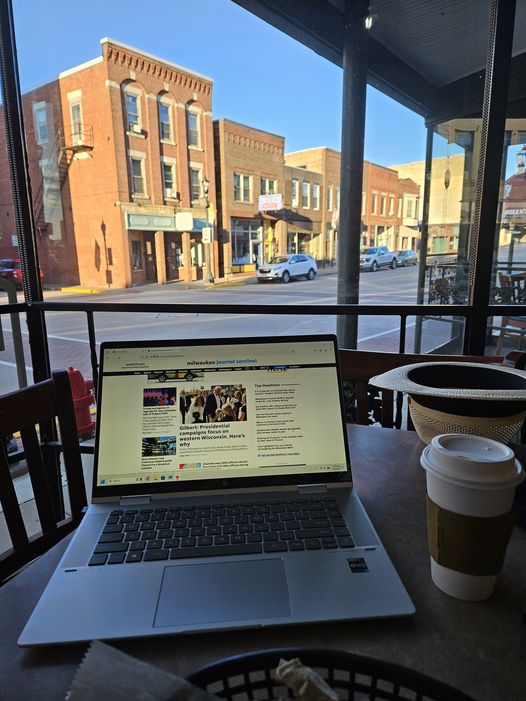

Wrapping up the day early due to intermittent showers, I headed west to Potosi, where I lived from 1968-75. For two more years after that, I came home for the summers while in college at UWP. My parents and younger brothers moved to Dubuque, Iowa, in 1977, but the house my folks bought, brand new–the first house they’d ever owned, in their 14th year of marriage–is still there.


The combined population of Potosi, and its smaller neighbor Tennyson, is currently 991. That’s gone down a bit since I was a kid. The 1970 census counted 1,115 folks in the two towns, so it’s down about 11%. The high school’s student body has actually shrunk by about 1/3. Not too many of my class of 1975 are still living in the area, and with one notable exception I wasn’t able to see any of them on this short visit, but our 50-year reunion is next year, and I’m already looking forward to it.
“Alma Mater, grand and glorious…”
Saturday was another very slow day at the craft fair, so I closed up shop a little early and headed back to my uncle’s place in Cuba City. Dennis Carpenter is my mother’s only brother, and since he’s just 12 years older than me, I always considered him more of an older brother than an uncle. He and his wife, Diana, are both retired and have been living in the same tidy little home on Madison St. for over half a century. On Friday night, we’d watched the Green Bay Packers kick off their NFL season in Brazil against Philadelphia, but on this Saturday night, we’d see football in person.
Denny and I are both alumni of UW-Platteville, which was opening its season at home against Lakeland, a small college from Sheboygan, on Wisconsin’s Lake Michigan coast. The school is about 1/4 the size of UWP and hadn’t provided much competition for our Pioneers in last year’s encounter, an 80-13 Platteville victory on Lakeland’s turf. This game wouldn’t be much closer: our lads roared to a 51-0 lead at halftime and added two more scores in the second half to win, 65-0.

Things didn’t go well for the Muskies right from the start. They took the opening kickoff, lost a total of 14 yards in three plays and punted. Or tried to, anyway; the Pioneers blocked the punt and recovered the ball at the 7, scoring three plays later for a 7-0 lead. Lakeland’s next possession lost a total of 14 yards and then the 4th-down snap sailed over the punter’s head and out of the end zone for a safety, giving the lads in blue a 9-0 lead, which quickly became 16-0 after they took the free kick and scored on a long pass play. Just over six minutes into the game, the Muskies were already looking forward to the long bus trip home.
There were a couple plays in this game that I’d never seen before. Lakeland’s best scoring opportunity came in the 2nd quarter. By now trailing 23-0, Lakeland moved the ball from its 25 down to the Platteville 11. A quarterback sack on third and 10 brought in the field goal unit. Denny and I had a good view of the play, and for some reason the Muskies’ left tackle pulled as if to run-block to his right and stepped into the path of the ball a split second after it left the kicker’s foot. The ball caromed off the tackle’s rear end and the Pioneers recovered. I’d never before seen a field goal blocked by the kicking team. At least, that’s how it appeared from our angle; the official play-by-play credited UWP’s Dylan Warren, a freshman from Wisconsin Dells, with the block. It’s possible he simply pushed the Lakeland tackle aside and got the block, but our original perception certainly makes for a better story.
Another odd one happened in the second half. Lakeland was back in punt formation yet again–they would get successful kicks nine times during the game, but suffered two blocks and the one errant snap–and this time the luckless punter got the kick away. It went straight up in the air, and I mean vertical, came down on the turf and bounced. The punter covered the ball eight yards behind the line of scrimmage. It was the first time I’d ever seen a punt stay behind the line without being blocked, and the punter covering his own punt was another first. I was a punter during my football days at Potosi High and had my share of adventures back in punt formation, so I could relate, to a point, but I’d never had a night this bad.
The river road home.
Sunday morning I left my aunt and uncle’s home and drove to Platteville, where I met my best friend from high school, Dave Esser, for breakfast. Dave lives in Lancaster, the Grant County seat, and runs a successful trucking business, which he’s hoping to sell soon so he can retire. We had a nice time catching up, and then I hit the road, making one last trip through Platteville to get onto the highway to Lancaster and then into the northern reaches of the county. I went through Bloomington, a town that once had a high school that was our biggest rival in athletics, probably because the Bluejays were usually very good–state small-school basketball champs in 1972, my freshman season–and we usually weren’t. But it was on the basketball floor at that school I played one of my best games as a senior, leading our Chieftains to an 11-point win, Bloomington’s first home-court loss in six years. Today, that building is the middle school for the River Ridge school district; the high school is based in nearby Patch Grove, which used to be West Grant High School (where, as it so happens, I also had a big game during my senior year, although we lost that game by one point).
I crossed the Wisconsin River at Bridgeport and entered Crawford County, the setting of my 2022 novel, The Man In the Arena. I’d actually lived in the county for one year when my father was the principal of Seneca High School, his first job in educational administration, for the 1964-65 school year. We lived in a rental house in nearby Mt. Sterling, a town of about 100 people. We’d moved from a suburb of Milwaukee, so to say it was a big difference would be an understatement. When I scouted the county back in the spring of ’22 for the book, I’d been impressed by its beauty, especially as I drove State Road 35 along the Mississippi. On this trip more than two years later, I’d be impressed again.
After going through Prairie du Chien with a stop at a coffee shop, I headed north and began to marvel at the beauty around me. Very soon I was approaching the little river town of Lynxville.

I’ve always been charmed by small towns, especially those here in Wisconsin, and this was no exception. I seem to remember my dad taking me to Lynxville to fish off the bank once or twice while we lived in Mt. Sterling, which is just a few miles inland. North of Lynxville, the bluffs became even more imposing.
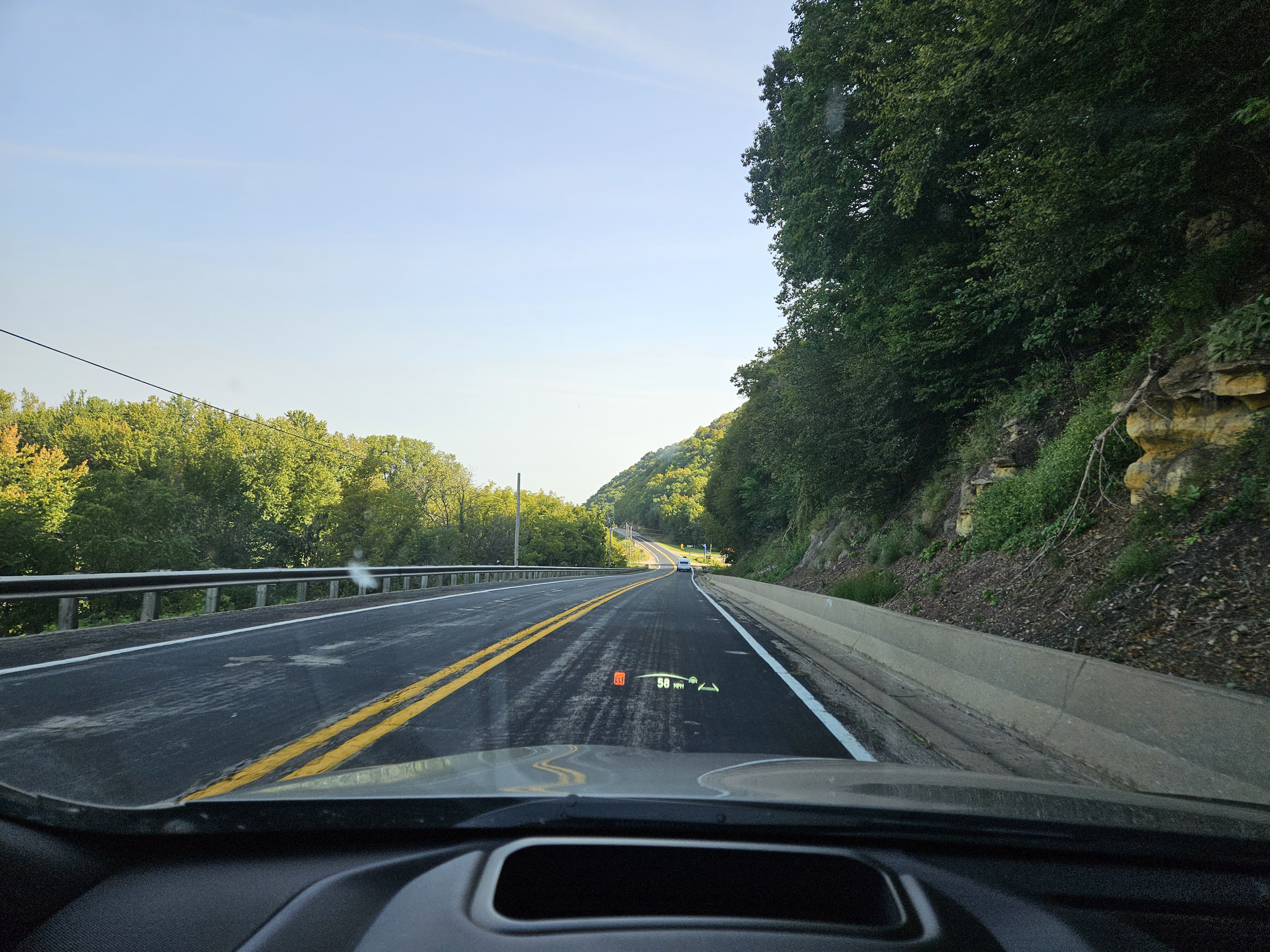
I drove through Ferryville, the river town that is the hometown of Scott Armstrong, the protagonist of TMITA, and very soon was in the town of De Soto. There’s a slough on the east side of the road, just to the south of the village, and there was a house on the far side of it that had always intrigued me.

So I decided to see what the other side of it looked like. I drove a little farther north into De Soto and doubled back onto Old Highway 35, which runs past the bluffside front of the house. It was nice, and I caught myself wondering, Could I live here? Turning around, I headed back toward the town and saw a real estate sign at an intersection with Lawrence Hill Road, which snaked up into the bluffs. Let’s just see where this leads, I thought. A few miles later, I emerged onto the ridge behind the bluffs and found the property, on a side road that ended almost literally at the bluff’s edge.
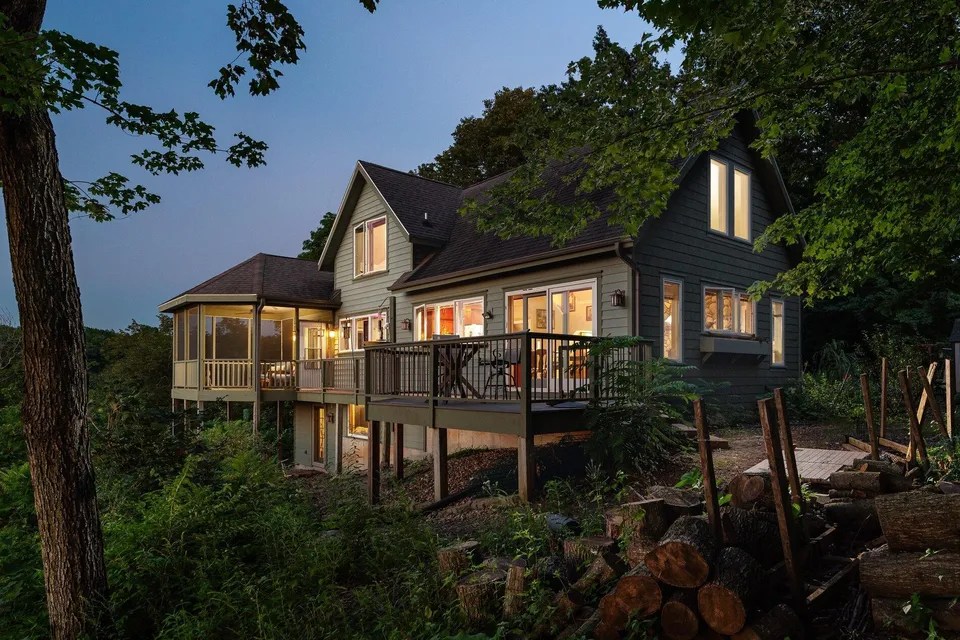
To say I was intrigued was an understatement. I saw it during the midday, not early evening as shown above on the realtor’s website, but I could immediately see the possibilities, along with some drawbacks. The house has no garage, for one thing, and I don’t know if there’s enough room on either side to build one. When I got home, I showed the website listing to Sue, who was also interested, especially because of this view.
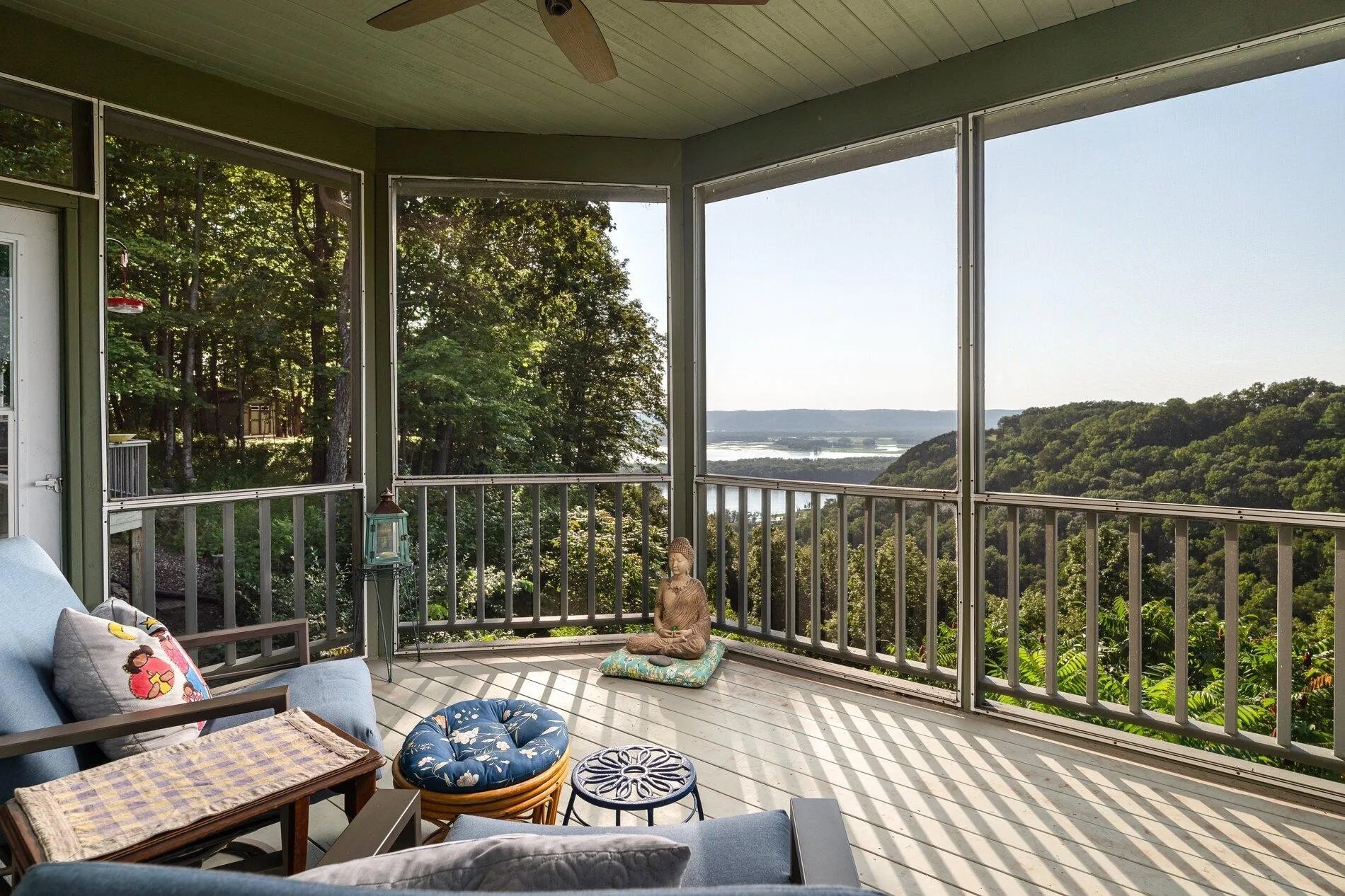
Sue is still working full-time in Rice Lake, so we’re not going to be making any kind of move, if we ever do, until she retires, but I’m telling you, this was tempting. I could almost hear the wheels turning in her mind as she looked at the photos of the interior and contemplated changes she’d make. You can take a look for yourself: 65748 De Soto Ridge Drive.
When I was there, I spent a few minutes talking to the owner, who came out to chat when she saw me pull up in my car, and then hit the road. I still had a long drive ahead of me, but I was mentally calculating distances from this place on the bluffs to the nearest town where any serious shopping could be done, La Crosse (23 miles from De Soto). All told, the house isn’t that much farther from nearby towns than ours is, up here in northern Barron County. We’re four miles from Birchwood, and Rice Lake, where we do most of our shopping, is 15 miles to the south. Sue would actually be a little closer to her best friend, who lives in Alma, another gorgeous little river town north of La Crosse, and of course I’d be a lot closer to Platteville and Potosi.
Alas, it’s only a dream. For now. But I have tell you, during that drive along the Great River Road, it was as if the bluffs and the river were calling out to me: “You could live here, Dave. You know you’d love it.” And I was channeling my favorite song from my teen years, the Doobie Brothers’ “Black Water,” which for me always captured the feeling of the river to near perfection.

Maybe someday, I’ll go back to the river and decide to stick around. In the meantime, I headed back home, to our beautiful house on a pretty nice lake, many miles away from the Mississippi but a place that’s been filled with love for more than thirty years. Home, as they say, is where the heart is, and mine is here, with Sue and our wonderful pets, Maisie the Morkie and Jezabel the Siamese. It’ll be a while before I leave. The Mississippi will be there when we’re ready.

 A Strenuous Writer's Life