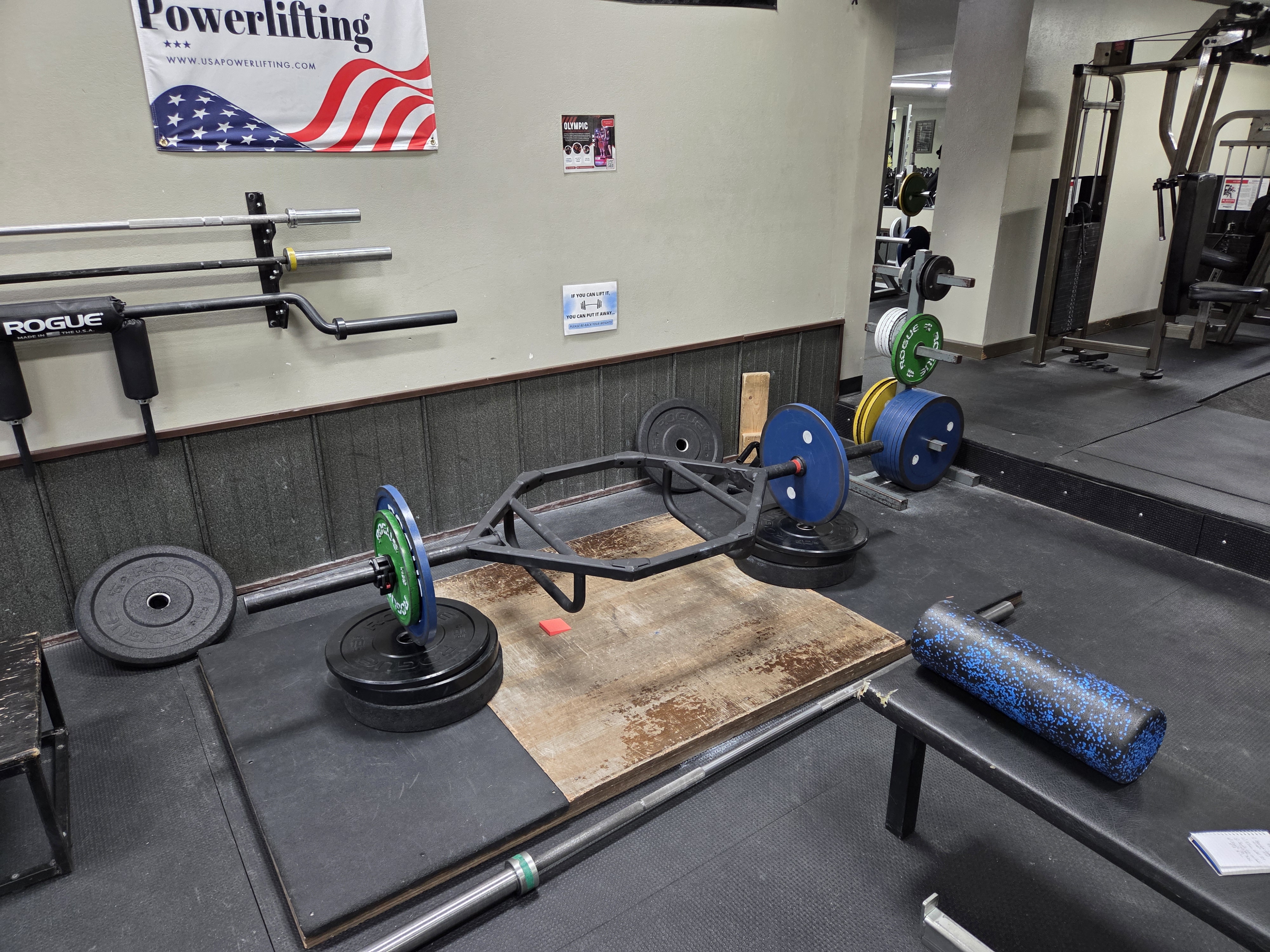
I was at Olympic Fitness the other day for one of my thrice-a-week workouts. It was leg day, and I prepared for what is probably my favorite exercise: the deadlift. I set up the balance plates, slid 140 pounds of weight plates onto the 70-pound hex bar and started psyching myself up to do my four sets of six reps apiece.
My regimen these days is based on a program suggested by my personal trainer, Tony Bergman from 4EverFit. I’ve utilized his services several times over the years, from rehabbing my knee replacements to training for a Spartan Race to preparing for our 2024 assault on Mt. Kilimanjaro. This time, I felt that my workouts had grown a bit stale and wanted him to show me how to reach my goals, which are quite simple: look great and feel great.
Well, to be more precise, I wanted to tone my body, without necessarily pointing to any particular goal. My Spartan racing and mountain-climbing days are over. My knees are holding up well, but my balance has been an issue since foot surgery a couple years ago. So, back to Tony I went, and he came up with the aforementioned reconfiguration of my deadlift routine. He’s a fan of the deadlift, as I am, and so I was eager to put his ideas to the test.
They work.
Three weeks into the campaign Tony designed for me, I’m now dead-lifting an amount close to my body weight. My goal is to get to 300 pounds, which would be considerably above my weight, to be sure. The inspiration for that is a local fellow named Jim Carlson, who set the state dead-lift record for his age division (85-90) at last year’s Wisconsin Master Games when he hit 280. (He’s done 310 at other events.) Jim is 86 and looks 15 years younger. He trains regularly at Olympic and I have picked up some good tips from him over the years.
The deadlift is known as the “King of Lifts” for a reason. It is a compound movement that is simple in execution but trains virtually every muscle. My readers know that I’m a fan of the Art of Manliness website, and its author, Brett McKay, is a power lifter who really has the deadlift down to an art form. Check out his video here: Brett’s Deadlift.
So, I did my 24 reps successfully, lifting a total of 210 pounds each time. That adds up to 5,040 pounds, which is slightly more than 2-1/2 tons. When I did the math in my head after the final set, I said something like “Holy cow! That’s a lot of weight.” Indeed, it’s more than my car weighs. It’s almost twice the combined weight of the defensive starters for the Super Bowl champion Seattle Seahawks.
But is it as much as my grandfather lifted? I decided to find out.
When men lifted because they had to.
My maternal grandfather, Alvin Carpenter, passed away in 1980, just a few weeks after his 64th birthday. His cancer was diagnosed just five months earlier. I got to see him in Platteville a couple months before he left us.
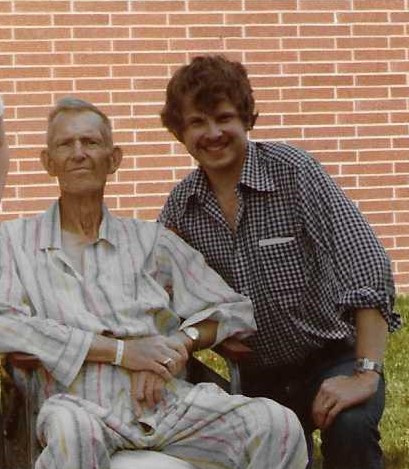
The photo doesn’t do Gramp justice, but it’s the last one ever taken of him and me together, so I chose this one. I was the first of his seven grandchildren, and we spent a lot of time together. He taught me how to hunt and fish, how to work on a car, and most importantly how to live a life of simple dignity and honor. He was married to my grandmother for nearly 47 years. She outlived him by 24 years, but never so much as had dinner with another man, a sign of her great love for Alvin.
Gramp wasn’t a guy to brag, but the stories told about him within the family are legendary. He was still 17 when he and Grandma married. (She was a year older.) It was the depths of the Depression and work was scarce. They had five children in a span of eight years, losing two of them in infancy to illnesses that would likely be easily curable today. They often had to rely on my grandmother’s farm family for food. One winter they subsisted largely on potato pancakes, according to Grandma.
Things didn’t start looking up for them until Gramp got work with the Milwaukee Road, then one of the state’s premier railroad lines. He became a depot agent, responsible for routing trains through his town, and he worked at many different depots throughout southern Wisconsin, from his hometown of Palmyra in the southeast to Platteville in the southwest, where my mother, his oldest child, met my father, a Platteville native.

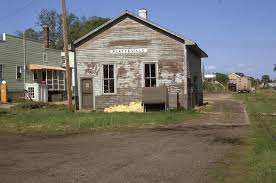
This was an important job, especially during the Second World War. The railroad was the primary means of transportation in the country back then, for both passengers and cargo. The interstate highway system was years away, and commercial air travel was in its infancy. Americans traveled and shipped by rail. The Milwaukee Road operated hundreds, sometimes over a thousand, trains per hour around the country. In 1944 alone, U.S. railroads transported some 780 billion ton-miles of freight, and over the course of the war nearly 50 million servicemen and women rode the rails to and from training camps and seaports.
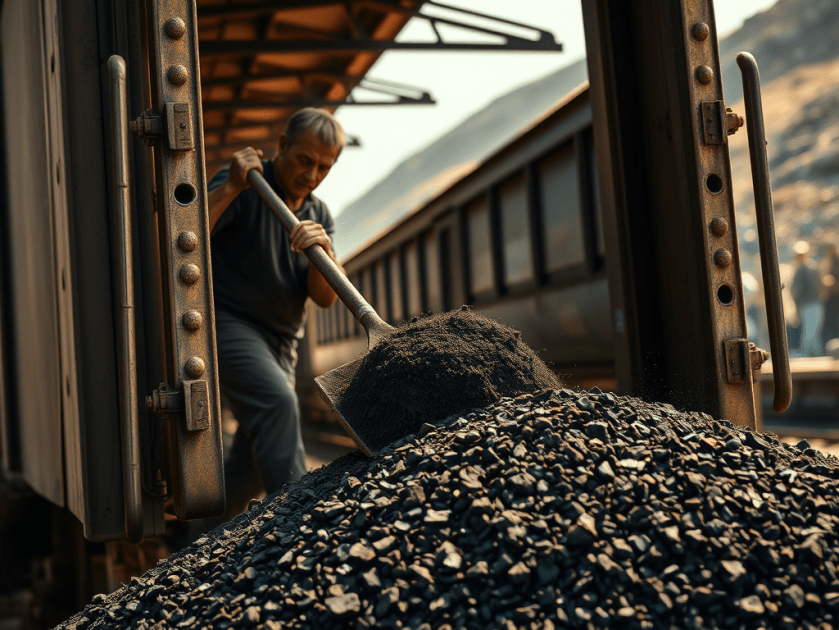
Before he got the Milwaukee Road job, Gramp did whatever work he could find to support his family, not unlike many men in the early ’30s. One of the jobs he had, according to family legend, was also a railroad job, but not nearly as nice and neat as a depot manager’s. For a time, Gramp shoveled coal out of railroad cars.
Train engines ran on coal in those days; cleaner, more efficient diesel engines would eventually take over, but during the ’30s the engines ran on steam generated by coal-fired power plants. They used coal for fuel, and lots of it. And at some point, somebody had to shovel that coal, by hand, either into the firebox itself or into and out of rail cars. I’m pretty sure Gramp’s job involved the latter. He was paid, according to family lore, a dollar a ton.
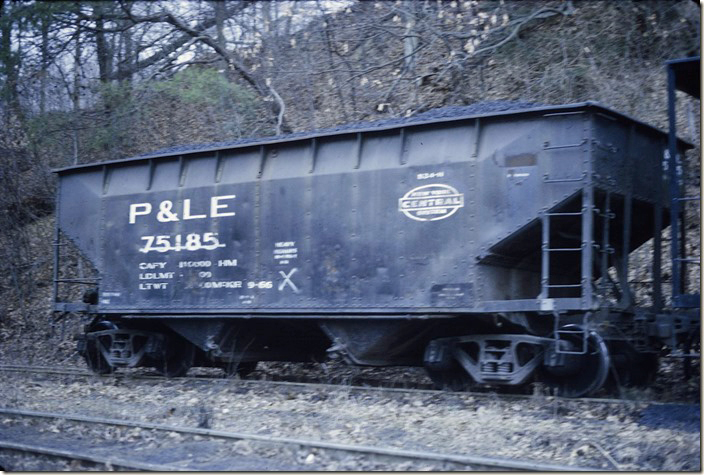
I decided to figure out how much coal my grandfather might shovel in an average day. I found that a typical shovel-full of coal would hold about 7-15 pounds. Let’s split the difference and give Gramp a little credit–he was a tall, broad-shouldered guy–and say he could average 12 pounds per shovel. He probably worked as part of a crew of men, a lot like this group:
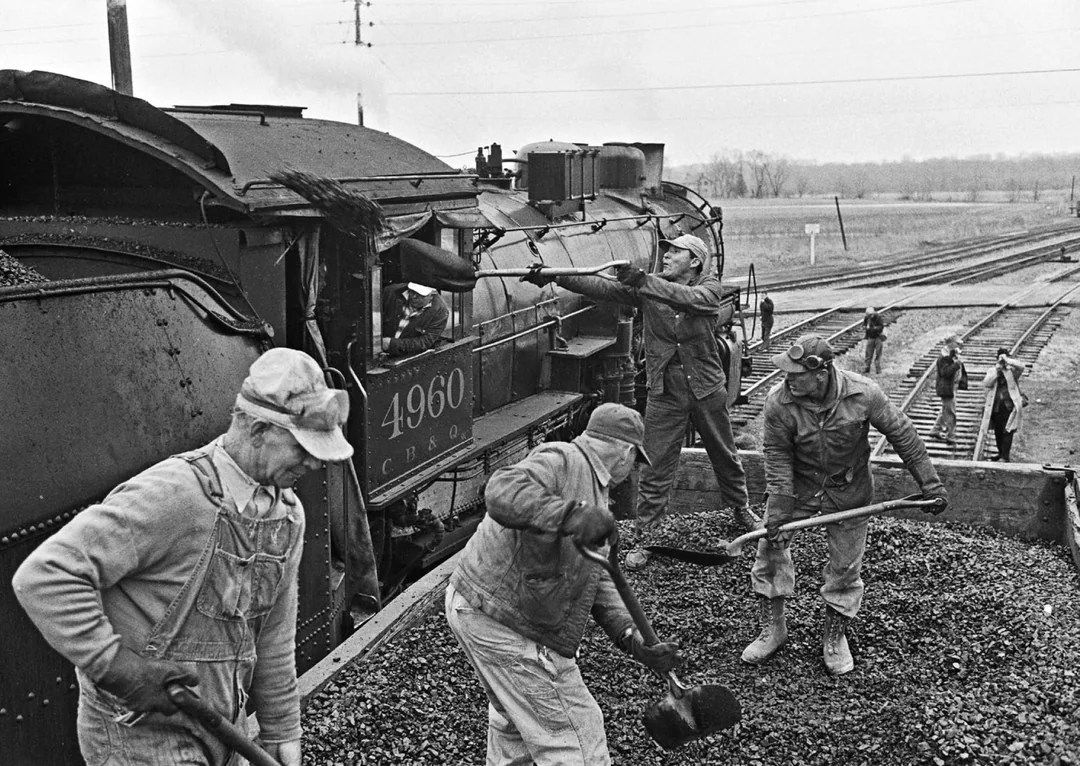
I don’t have a lot of experience shoveling anything, except for snow, so I’m just kind of winging it here, but let’s say each of these four guys can average one shovel-full of coal moved every 15 seconds. You have to dig your shovel into the coal, lift the load, steady yourself, and then empty it into the coal tender behind the train’s engine. You might have to walk across a couple yards of unsteady coal with your full shovel, then walk back with your empty one. So Gramp might be able to do four shovels in a minute, moving about 45-50 pounds in that time. The four-man crew could then do 150-200 pounds per minute.
Each of these cars held 70 tons of coal. The coal tender of a typical steam engine in those days held 25-30 tons. To keep it simple, let’s say the crew would shovel from a full car to an empty tender till the tender was full, then would wait while that engine pulled away and another came in for a load. So, a full coal car would fill three tenders. How much coal could a four-man crew shovel in one 8-hour day? Even a guy as strong as Gramp couldn’t keep up a 4-shovels-per-minute pace all day long, so let’s say the average is 3 shovels per minute. Let’s further assume the crew gets a 10-minute rest period every hour. I’m probably being generous here, but they’d have to be given water at some point. So, a crewman does about 150 shovels per hour, and that means about 1200 shovels per day.
1200 shovels X 12lb/shovel = 14,400 pounds of coal moved in a day. That’s over 7 tons. It adds up pretty quickly. At that pace, a 4-man crew would do 28 tons in a day. It would take them a full day to fill one tender, more than 2 days to empty a coal car. At a buck a ton, the crew would earn about $7/day apiece. Is that a reasonable wage for such work in the 1930s? Google tells me that unskilled labor, which I presume would include coal-shoveling, would bring a wage of 45c/hr (35c/hr for non-white workers). At 7 tons shoveled per 8-hour day, if he’s paid a dollar a ton, that’s 90c/hr. Compared to the average unskilled laborer, the coal-shovelers were doing all right, in the context of the times.
For an 8-hour day, that unskilled railroad worker would earn $3.60, or $21.60 for a 6-day week. How far would that go in 1936, the year my mother was born? Back to Google, which tells me that $1 in 1936 would have the buying power of $23.40 today. A new car cost $700, a pound of bacon 19 cents. Gramp was a smoker, which undoubtedly contributed to his early death (he’d given it up in 1970), and a pack of cigarettes would’ve cost him 14 cents. The median income for a white worker was $956 per year. Needless to say, hardly any of those jobs had any kind of benefits, as we would call them today. Google says that having a baby would cost the typical household about 10% of its annual income. My grandmother told me she would pay the doctor who delivered her children by barter; she would do the doctor’s laundry, ironing and mending for weeks.
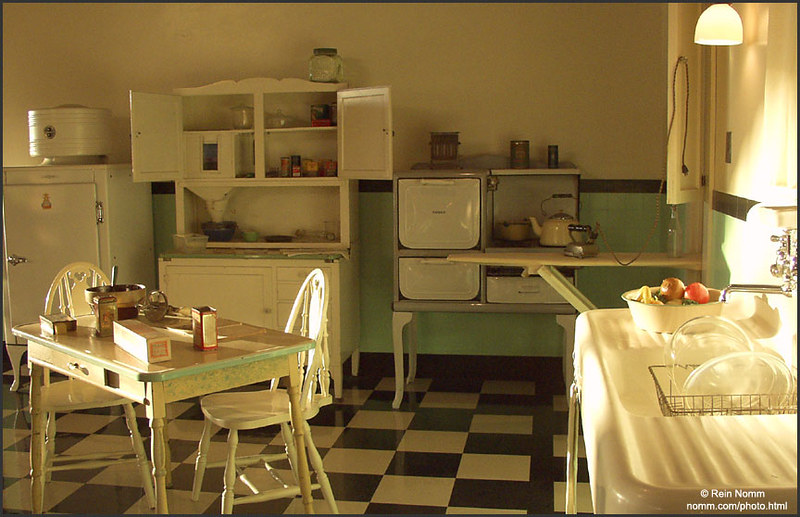
I don’t know how long Gramp worked at that coal-shoveling job. It wouldn’t have been too long, surely. His depot manager job would’ve been a lot less physically stressful, but there was a lot of mental stress involved. He communicated with other depots by telegraph–I still have his telegraph key–and also had a telephone, of course, and no doubt he utilized both extensively to make sure the trains were clear to their destinations on the various tracks. He told me once that during the war, he once thought he’d made a serious mistake by routing two trains onto a collision course. It turned out that he hadn’t, but for a very tense half-hour or so, there was no way for him to know until he got an update from a depot down the line. With all those trains moving, around the clock, it had to be a very stressful job indeed. My mother told me once that during the war, there was a time when Gramp worked 10-12 hours a day, 7 days a week, for nearly a year.
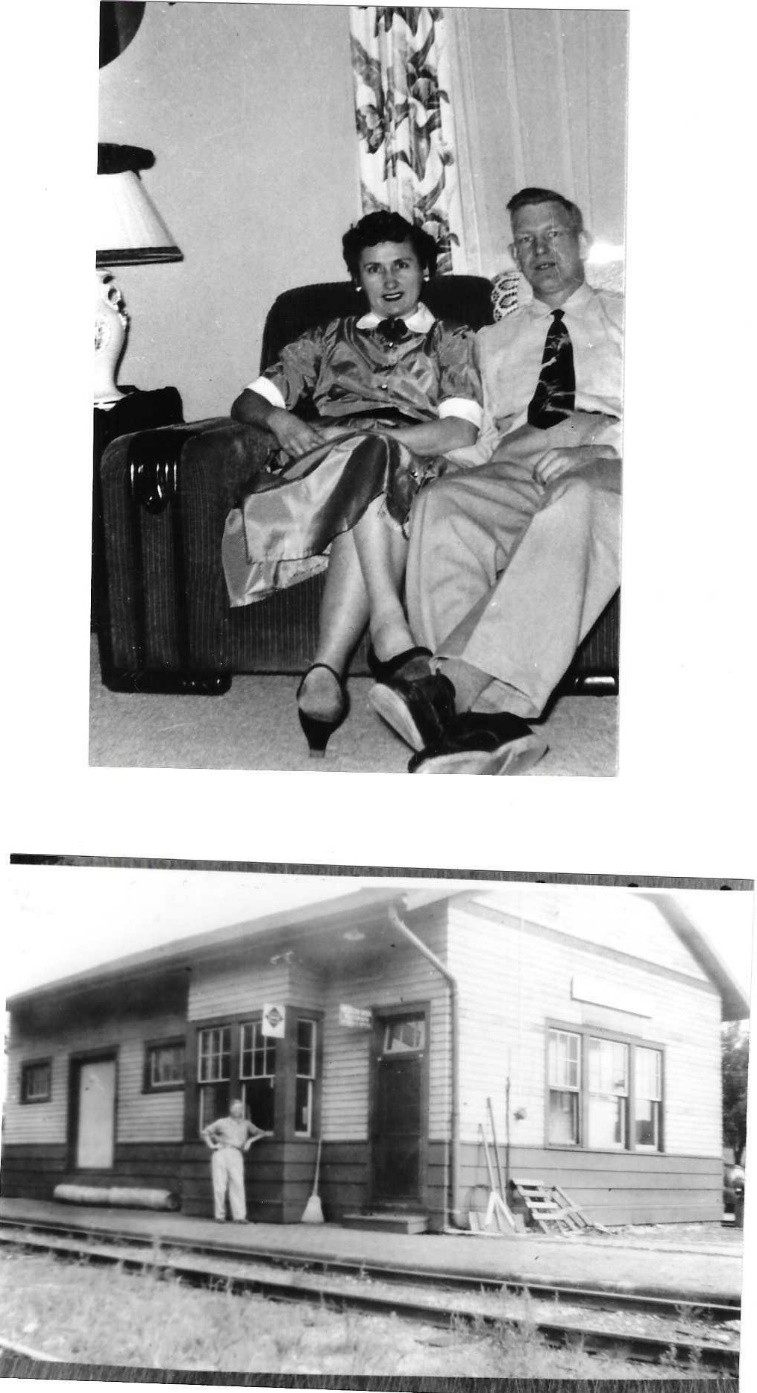
A legacy of lifting.
I doubt whether Gramp ever lifted a weight in a gymnasium in his life. He didn’t have to. His depot job would be considered white-collar work today, but even in his 50s and 60s, he was never what we would consider to be “out of shape.” I can remember us going on a Lake Michigan fishing trip when I was 16 and catching some large lake trout. When we brought them ashore, we posed for pictures with the little Instamatic camera he and Grandma had gotten me for Christmas. The fish probably weighed about 35 pounds, very good-sized, and in the photo I’m having a hard time holding it up by a rope with both hands. In his photo, Gramp hefted it easily with one. This memory also gets me thinking about the nonexistent weight-training program at my high school, but mostly I remember how effortlessly Gramp lifted that fish.
I’ll be going back to the gym to lift tomorrow. It’ll be upper-body day; Tony’s regimen has me doing a lot of dumbbell exercises, and I can’t even begin to calculate how much weight I’ll lift in total. Of course, I pay a monthly membership fee to Olympic, and paid Tony for his time and expertise during our training sessions. Once I graduated college and began working in radio in 1979, I never again had a job that required any real kind of manual labor. Lots of stress mentally, though, and occasional physical stress with long days and road trips, but nothing like what Gramp had to endure, just to put a minimal amount of food on his family’s table.
He did that with the goal that his own surviving children wouldn’t have to work so hard. It’s like that for every generation. My mother married at 18, raised three boys with my father and got her college degree in accounting when I was in high school. She worked for the next 24 years to help my dad put us boys through college and set up a comfortable retirement. Mom and Dad showed us how it’s done, and our grandparents served as shining examples of how to live simple but dignified lives of hard work, faith and family.
So, when I go back to the gym, I’ll be lifting for my own health, mental as well as physical, but I’ll also be lifting for you, Gramp. Thanks for showing me the way.
 A Strenuous Writer's Life
Grandma Carpenter also told me that in the lean years when Grandpa was looking for railroad work he would go to a station and sleep there overnight in hopes that he could get work in the morning.